Bat Removal Services

Proudly serving: Hamilton, Burlington, Oakville, Kitchener, Waterloo, Guelph & Niagara


Bats are found throughout Ontario and commonly seek out buildings that provide the warmth and shelter they need for roosting and raising their young. They can take advantage of surprisingly small openings around a home, turning attics, soffits, rooflines, and wall cavities into protected roosting areas.

Addressing bat activity early is important because an established colony can lead to accumulating guano and urine, contaminated attic insulation, persistent noises, and recurring activity year after year. Professional bat removal focuses on finding these access points, safely encouraging the bats to leave, and preventing them from getting back inside.

Our licensed wildlife removal technicians assess the home for active and potential entry points and use humane exclusion as our primary method of removal. This typically involves installing one-way doors that let bats exit naturally while preventing them from returning through the same opening. After the bats have left, vulnerable areas can be professionally sealed with animal-proof materials, helping protect your home from future bat activity.

Signs of Bat Activity


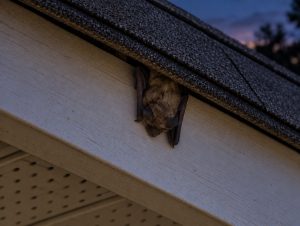
Although bats are beneficial outdoors, having them roost inside your home can lead to concerns that go well beyond occasional noises in the attic. Bats often settle into quiet, protected spaces such as attics, soffits, wall cavities, and roof openings, where their presence may go unnoticed for an extended period.A bat wedged in a small opening around the roofline of a house.
As bats continue using these areas, guano and urine can build up, creating strong odours, staining materials, and contaminating attic insulation. An established roost can also become a recurring problem because bats may return to familiar locations when suitable entry points remain accessible.

Since bats can squeeze through remarkably small gaps along rooflines, fascia, vents, and soffits, waiting for them to leave doesn’t prevent future activity. Professional bat removal and exclusion addresses both the animals and the access points they rely on, allowing bats to leave humanely while helping secure the home against re-entry.
What can you expect from our Bat Removal services?

We specialize in humane bat exclusion, using professionally installed one-way doors that allow bats to leave the structure naturally while preventing them from re-entering through the treated opening.  Our bat removal services are designed to safely remove bats from your home while helping prevent them from getting back inside. Our experienced, licensed wildlife removal technicians inspect the property to identify active entry points, potential access areas, and signs of bat activity around the roofline, soffits, vents, and attic.

Once we have confirmed the bats are gone, the one-way doors are removed and the entry points are sealed using durable, animal-proof materials designed to withstand future wildlife activity. Rather than simply addressing the bats you can see, our approach focuses on securing vulnerable areas of the structure for more effective, long-term protection. Sealed areas completed as part of our bat exclusion work are also backed by a warranty, giving homeowners added confidence that the treated entry points remain protected.

Our bat removal services include:

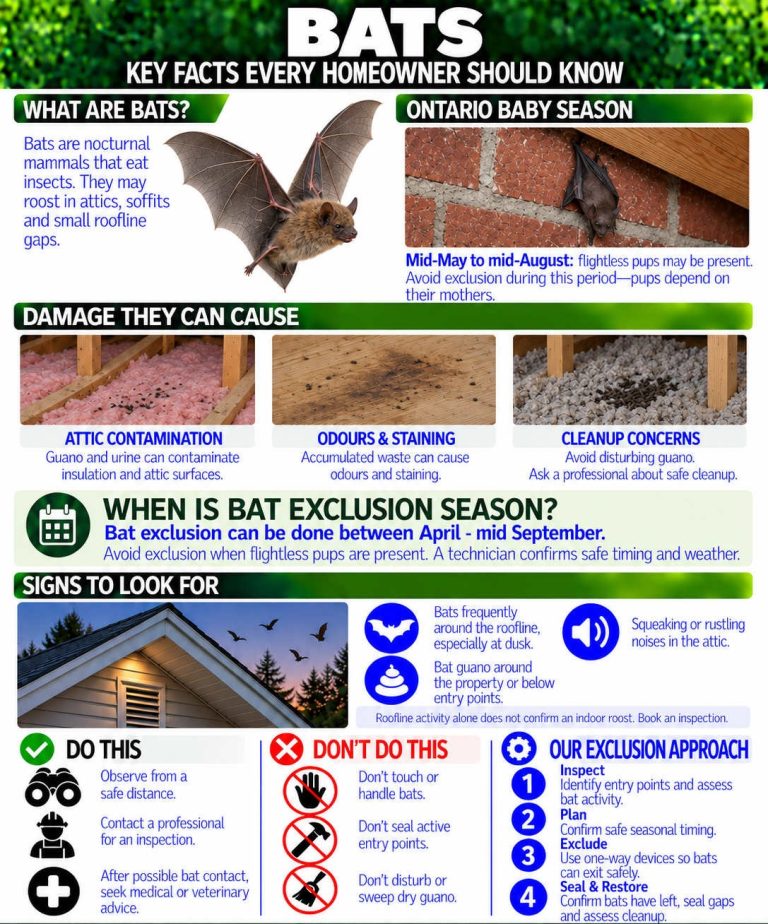
An infographic about bats.

Why Choose us for Bat Removal?

Successfully dealing with bats means understanding how they enter a home and making sure those access points are properly addressed.
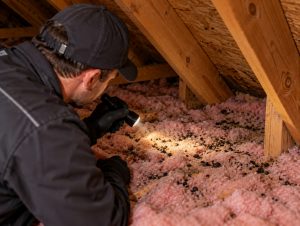
A wildlife technician inspection bat guano in an attic.

Our licensed wildlife technicians have experience working with bat activity in Ontario homes, including difficult-to-spot openings around soffits, fascia, vents, and rooflines. We focus on humane exclusion, using one-way doors to give bats a safe route out before securing entry points with durable, animal-proof materials.

Our technicians also account for bat maternity and exclusion seasons when determining the appropriate approach and timing for the work. Once exclusion is complete, the areas we seal are backed by a warranty, providing added protection against bats using those same openings again.

Some reasons to choose us include:

Get Rid Of Bats

Reach out to our team to schedule your inspection!

Frequently Asked Questions:

Common signs of bat activity include scratching, squeaking, or fluttering noises coming from the attic, walls, or ceiling, particularly around dusk and dawn. You may also notice bats frequently flying around the roofline, bats entering or exiting small gaps near soffits, fascia, vents, or roof edges, and bat guano accumulating below entry points or inside the attic. Dark staining around small exterior openings and recurring bat sightings near the home can also indicate that bats are using the structure as a roost.

Professional bat removal uses humane exclusion methods to safely get bats out of a home without trapping them inside. After identifying the active entry points, a wildlife technician installs specialized one-way doors that allow bats to exit naturally while preventing them from returning through the same openings. Once the bats are confirmed to be gone, the exclusion devices are removed and the entry points are sealed with durable, animal-proof materials to help prevent future bat activity.

A one-way door is an exclusion device installed over an active entry point. It is designed to let an animal leave the structure while making it difficult for them to get back inside through that opening. After sufficient time has passed and the technician has confirmed the exclusion process is complete, the device can be removed and the opening properly sealed.

Yes, our sealed areas are backed by a 5 year warranty according to the terms of the completed work. The warranty applies to the areas we have professionally secured, rather than guaranteeing that wildlife cannot access an unrelated or untreated portion of the building.

Bat exclusion must be carefully timed because bats have seasonal roosting and maternity cycles. During maternity season, young bats may not yet be able to fly. Installing a one-way door at this time could allow adult bats to leave while trapping their young inside the structure. In Ontario, technicians need to consider the time of year, weather conditions, bat activity, and the possibility of dependent young before proceeding with exclusion work.

Bat exclusion is generally performed outside the maternity period and before bats become inactive for the winter. Our team performs bat exclusion work between April – mid-September to comply with Ontario’s laws and regulations.

Baby bats are initially unable to fly and depend on their mothers while developing inside the roost. If exclusion devices are installed too early, adult bats may exit and be unable to return to their young. For this reason, professional bat removal should account for maternity season rather than simply sealing an opening as soon as bat activity is discovered.

You do not need to wait to have the property assessed. Even when seasonal conditions mean exclusion work cannot be completed immediately, an inspection can help identify activity and potential access points so the appropriate work can be planned for a safe exclusion period. Avoid sealing suspected openings yourself in the meantime, as bats or dependent young may still be inside.

An active bat entry point should not simply be sealed shut while bats are inside. Doing so can trap bats within the attic, walls, or other parts of the structure and may cause them to search for another way out, potentially leading them into living areas. One-way exclusion devices provide bats with an exit before the active opening is permanently sealed.

Once the exclusion process is complete, the one-way devices are removed and the treated entry points are sealed using durable, animal-proof materials. Addressing these openings is an important part of long-term bat control because removing bats without correcting access points can allow activity to return.

Bats may continue investigating a familiar roost after exclusion, which is why properly sealing access points is so important. Our exclusion work focuses on securing the areas bats have been using with durable materials. Sealed areas are backed by our warranty, providing additional protection if bats regain access through an area covered by the completed work.

Avoid handling the bat with bare hands and keep people and pets away from it. A bat found inside a bedroom or other occupied living area can involve considerations beyond normal attic exclusion, particularly if there is a possibility of direct contact with a person or pet. In those situations, follow local public-health guidance in addition to arranging for the building to be inspected for potential bat entry points.

Call Us To Schedule Your Bat Inspection!