Mice Control Services
Proudly serving: Hamilton, Burlington, Oakville, Kitchener, Waterloo, Guelph & Niagara
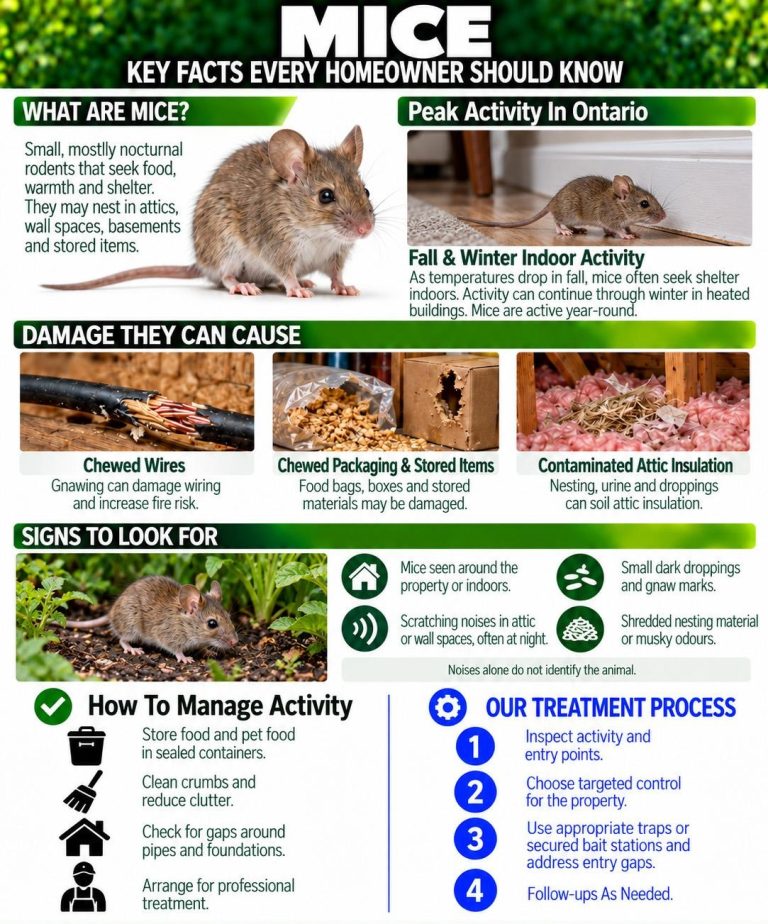
Mice are a common problem in Ontario, especially during the cooler fall and winter months when mice seek warmth, food, and shelter inside homes. They should be addressed quickly because they reproduce rapidly, contaminate food and surfaces, and can damage insulation, stored belongings, and electrical wiring through constant gnawing.
Finding mice in your home can be concerning, but a mouse infestation can be effectively managed with professional treatment. Mice control involves identifying signs of rodent activity, locating areas where mice are travelling or nesting, and using targeted control methods to reduce and eliminate the infestation.
Our licensed pest control technicians inspect key areas of the property and use professional-grade rodent control products and equipment to target mouse activity throughout the home. With proper treatment and practical recommendations for reducing entry points and attractants, we can help eliminate mice and prevent ongoing rodent problems.
Signs of a Mouse Infestation
- Seeing live or dead mice around your home
- Chewed food, packaging, paper, or clothing
- Droppings around kitchens, basements, garages, or storage areas
- Gnaw marks on food packaging, wood, or wiring
- Greasy rub marks along walls and baseboards
- Shredded paper, insulation, or other nesting materials
- Scratching noises behind the walls or floors
Mice are much more than a nuisance when they enter your home. These small rodents can contaminate food and surfaces with droppings and urine, damage insulation and stored belongings, and gnaw on electrical wiring, wood, and other building materials.

Mice also reproduce quickly and can remain hidden inside walls, attics, basements, garages, and kitchens, allowing a small problem to grow before homeowners realize how much activity is present.
Because mice can squeeze through very small openings and move throughout a property in search of food and shelter, early professional mice control can help eliminate the infestation, limit property damage, and reduce the chance of the problem becoming more difficult to manage.
What can you expect from our Mice Control services?
When you choose Elite Pest & Wildlife Removal for mice control services, you can expect a thorough approach from experienced, licensed pest control technicians who understand how mice travel, nest, and hide inside Ontario homes.
Our team is experienced in assessing areas of activity and strategically place professional-grade products to target the infestation. Our technicians follow safe application practices for homes with children or pets, and use secure placement methods, including tamper-resistant bait stations where appropriate, to help limit unintended access.
We also provide practical recommendations for reducing food sources, potential attractants, and identifying possible entry points to help get current mouse activity under control and reducing the risk of future infestations.
Our mice control services include:
- Exterior inspection
- Rodenticide station placement
- Post-treatment recommendations
- Rebait visits as needed
Why Choose us for Mice Control?
Mice problems require more than placing a few traps and hoping the activity stops. Our licensed pest control technicians understand how mice behave in Ontario homes and know where to look for nesting areas, travel routes, droppings, and potential entry points.

We use professional-grade rodent control products to target active infestations. Our technicians will also perform an exterior inspection to identify possible entry points, potential attractants, and provide recommendations to help reduce future problems.
With careful treatment and clear guidance on what to expect afterward, we can help get mouse activity under control and protect your home from ongoing rodent issues.

- Reliable and Durable Solutions
- Safe for Children and Pets
- 100% Customer Satisfaction
- Long-term Mice Control
Get A Free Estimate
Wildlife Services:
Pest Services:
Frequently Asked Questions:
Our technicians use professional-grade rodent control products according to label requirements and established safety practices. Where rodenticide is appropriate, products can be placed in secure stations or carefully selected areas to help limit unintended access. Your technician will explain any precautions relevant to your home, children, and pets.
Every infestation is different, but mouse control is not always immediate. It can take approximately two to three weeks for activity to significantly decrease as mice encounter the treatment. The size of the infestation, available food sources, entry points, and conditions throughout the property can all affect the timeline.
Traps can catch individual mice, but they may not address a larger infestation or the conditions allowing mice to remain inside the property. Professional service takes a broader approach by evaluating activity patterns, harbourage areas, potential entry points, and other factors that may be contributing to the problem.
Rebait frequency depends on the level of mouse activity and how quickly bait is being consumed. Properties with heavier infestations may require more frequent monitoring initially, while established control programs may need less frequent servicing. During a rebait, the technician can inspect stations, replenish bait when necessary, and assess whether mouse activity is increasing or decreasing.
Not necessarily. Sealing openings without understanding the extent of the infestation can potentially leave mice trapped inside the structure. It is often better to assess and control active rodents first, then address exterior gaps and other entry points as part of a longer-term prevention strategy.
Yes. Mice continually gnaw to maintain their teeth and may damage insulation, stored belongings, wood, plastic, and electrical wiring. They can also contaminate areas with urine and droppings, which is why signs of mouse activity should be addressed promptly.
Treatment can eliminate mice currently active inside a home, but it cannot prevent new mice from entering through accessible exterior openings. Mice may return if gaps around foundations, pipes, utility lines, doors, garages, or other entry points remain available. Nearby food sources, clutter, and seasonal changes can also attract new rodents to the property.
Keep food in sealed containers, clean crumbs and spills promptly, reduce clutter, secure garbage, and avoid leaving pet food accessible overnight. Exterior gaps around pipes, doors, foundations, and utility penetrations should also be inspected and properly sealed when appropriate. Reducing both entry points and available food makes a property less attractive to mice.
Although older buildings may have more gaps and structural openings, mice can enter both new and older homes. Even a well-maintained property can develop a mouse problem if rodents find an accessible opening and suitable food or shelter nearby.
Mice can squeeze through surprisingly small openings around foundations, utility lines, pipes, doors, garage entrances, vents, and other exterior gaps. Once inside, they can travel through wall voids and other concealed areas to reach food and nesting locations.
Mice can be treated at any time of year, and treatment should begin as soon as signs of activity are discovered. Problems are especially common during fall and winter in Ontario, when cooler temperatures encourage mice to seek food, warmth, and shelter indoors. Starting treatment early can help prevent a small population from becoming a larger infestation.