Skip to content
Rodents are remarkably good at living inside a home without being noticed. Mice and rats often settle in quiet areas where homeowners spend very little time, making attics and garages particularly attractive. These spaces provide shelter, nesting materials, protection from predators, and easy access to other parts of the house.
As temperatures begin to cool in Hamilton and across Southern Ontario, rodent activity around homes can become increasingly noticeable. Mice and rats searching for reliable shelter may investigate foundations, garage doors, rooflines, utility openings, vents, and other structural gaps. Once they find a suitable entrance, an attic or garage can provide everything they need to establish themselves.
Recognizing the early signs of rodents can prevent a small problem from developing into a larger infestation. From unusual noises and droppings to damaged insulation and gnaw marks, there are several clues that mice or rats may be sharing your home.
Why Rodents Choose Attics and Garages
Attics and garages offer rodents something that busy living spaces usually do not: privacy. An attic may remain undisturbed for months at a time. Insulation provides excellent nesting material, while the enclosed structure protects rodents from weather and predators. Once mice enter an attic, they can travel through wall cavities and ceiling spaces to explore other parts of the house.
Garages offer different advantages. Homeowners commonly store garbage, recycling, grass seed, bird seed, pet food, cardboard boxes, and other materials inside them. Garage doors also tend to have more potential entry points than standard exterior doors. A mouse that enters the garage may eventually discover openings leading into the walls, basement, ceiling, or adjoining rooms.
Scratching and Scurrying Noises
One of the first signs of rodents in an attic is often sound. Homeowners may hear scratching, scurrying, chewing, or light tapping above the ceiling. These sounds are usually most noticeable when the house becomes quiet.
Mice are relatively small, so their movement can sound surprisingly subtle. You may hear brief scratching or rapid movement across the attic rather than heavy footsteps. Rats are larger and can produce louder noises. Scratching, gnawing, and movement may be easier to distinguish, particularly when activity occurs directly above a bedroom.
Sounds inside walls can also indicate that rodents are travelling beyond the attic. Wall cavities provide hidden routes between floors, making it possible for rodents to move throughout a house without crossing open rooms.
Rodent Droppings in the Attic or Garage
Droppings are one of the clearest indicators of rodent activity. Mouse droppings are generally small, dark, and pellet-shaped. Rat droppings are noticeably larger. They may appear along walls, around stored belongings, near insulation, beside garage doors, or along regular rodent travel routes.
The location and amount of droppings can help indicate where rodents are spending their time. In a garage, check behind storage bins, along the perimeter walls, beneath shelving, and near stored food products. In an attic, droppings may be found on top of insulation, around access hatches, or near structural openings. Avoid handling rodent droppings with bare hands or sweeping contaminated material in a way that creates airborne dust. Significant contamination may require specialized cleanup procedures.
Damaged or Disturbed Attic Insulation
Rodents can turn attic insulation into nesting material. Mice may tunnel through loose insulation, creating pathways between nesting and feeding areas. Over time, sections of insulation may look compressed, displaced, or disturbed. You might also discover small nesting areas containing shredded paper, fabric, insulation, cardboard, or other soft materials.
These signs can be difficult to see from the attic entrance, especially when insulation is deep. If you suspect rodents, avoid walking across an unfinished attic unless you know where it is safe to step. Ceiling drywall is not designed to support a person’s weight. A professional inspection can assess areas that are difficult or unsafe for a homeowner to reach.
Gnaw Marks Around the Garage
Mice and rats have incisors that grow continuously, so gnawing is a normal part of their behaviour. In garages, chewing damage may appear on cardboard boxes, plastic containers, wood, weather stripping, and stored materials. Bags containing bird seed, grass seed, pet food, or other edible products are particularly vulnerable. You may find a small hole chewed into the corner of a bag or container with food scattered nearby.
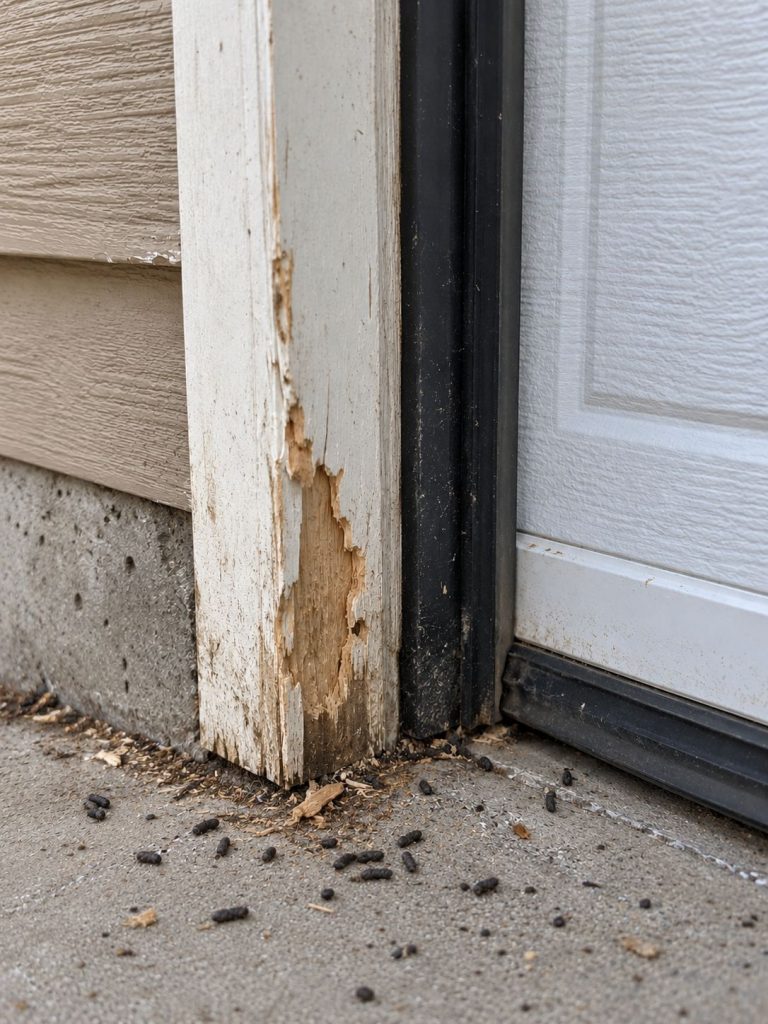
Gnaw marks can also appear around structural entry points. A mouse may discover a small gap around a garage wall and chew surrounding material to make the opening easier to use. Fresh gnawing may appear lighter than older damage because newly exposed material has not yet become dirty or weathered.
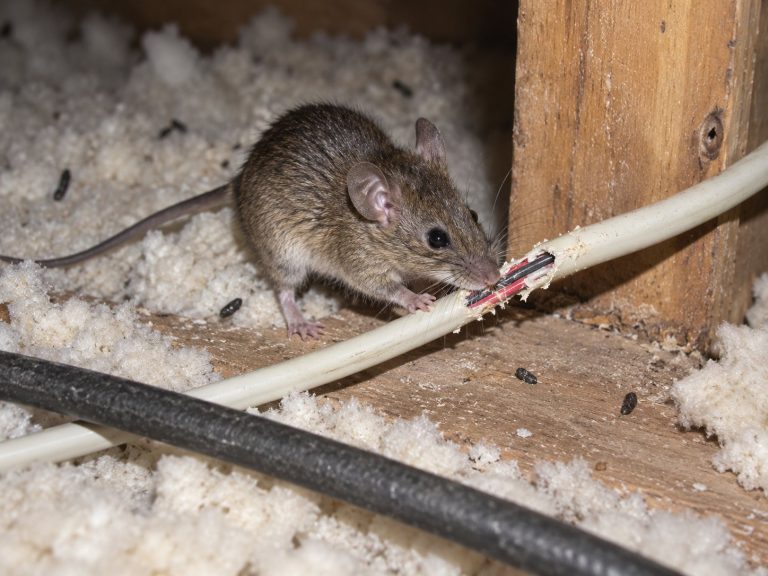
Chewed Wiring Can Be a Serious Concern
Rodent chewing becomes more concerning when electrical wiring is involved. Attics, garages, and wall cavities contain electrical cables that rodents may encounter while travelling or nesting. Damage to the protective coating around wiring can create electrical problems and potential safety concerns.
Not every rodent infestation results in damaged wiring, but visible chewing should not be ignored. If you find damaged electrical cables, have the electrical issue evaluated by a qualified professional in addition to addressing the rodent infestation itself. Removing the rodents without addressing the damage they caused leaves part of the problem unresolved.
Unusual Odours in Enclosed Areas
An unexplained smell in an attic or garage can sometimes indicate rodent activity. Urine and droppings can create a stale or unpleasant odour when rodents have occupied an area for an extended period. The smell may become stronger in poorly ventilated spaces or around nesting sites.
A particularly strong localized odour can also occur if a rodent dies inside a wall, attic, or other inaccessible area. Odour alone cannot confirm a rodent infestation because moisture, mould, drains, and other household problems can create similar smells. When unusual odours occur alongside droppings, scratching noises, or gnawing, however, rodents become a more likely explanation.
Grease Marks Along Rodent Travel Routes
Rodents frequently follow the same paths. As mice and rats repeatedly travel along walls, pipes, framing, or other surfaces, oils and dirt from their fur can leave dark marks behind. These are often called rub or grease marks. They may be more noticeable with established rat activity because rats are larger and tend to leave more obvious markings.
In a garage, look along the bottom of walls and around openings behind appliances or storage areas. Attic markings may appear around framing or regularly used access points. Repeated travel patterns are useful during professional rodent inspections because they can help identify where animals are entering and moving through the structure.
Shredded Materials and Rodent Nests
A pile of shredded material tucked into a quiet corner deserves attention. Rodents build nests from materials they can easily carry or tear apart. Cardboard, paper, fabric, insulation, tissue, and other soft products may all be used. Garages provide an abundance of these materials. A cardboard box that has been sitting undisturbed for months can become both a shelter and a source of nesting material.
Mice may establish nests behind shelving, inside boxes, beneath workbenches, or inside wall cavities. Attic nests can be hidden beneath insulation, making them more difficult to detect. Discovering a nest is a strong indication that rodents are not simply passing through the area.
Damage to Stored Food and Seed
A garage can unintentionally become a rodent food supply. Bird seed is one of the most common attractants. Pet food, grass seed, vegetable seeds, garbage, and even forgotten snacks can also encourage rodents to remain in the area. Paper and thin plastic packaging offer little protection against mice or rats.
If you find torn bags, small holes in food containers, scattered seed, or droppings nearby, move edible materials into durable containers with secure lids. Removing the food source is helpful, but it does not eliminate rodents that have already established themselves inside the structure. Entry points and the existing population still need to be addressed.
Your Pets May Notice Rodents Before You Do
Dogs and cats sometimes detect rodent activity long before homeowners see a mouse. A pet may suddenly become fascinated with one section of a wall, garage cabinet, ceiling, or attic hatch. Cats may sit quietly watching the same location, while dogs might sniff, scratch, or become unusually alert around a wall.
This behaviour does not prove rodents are present, but repeated attention to a specific location can be worth investigating. Pets have much stronger hearing and smell than humans, allowing them to detect movement hidden behind building materials.
Mouse or Rat Sightings During the Day
Seeing a rodent is an obvious warning sign, but the circumstances matter. Mice and rats generally prefer to move around when there is less human activity. A rodent briefly crossing a garage at night may be the first visible indication of a hidden problem.
Repeated sightings deserve attention regardless of the time of day. Do not assume there is only one mouse because you have only seen one. Rodents spend much of their time hidden, and visible activity may represent only a small portion of what is occurring behind walls, stored belongings, or insulation.
How Rodents Get Into Attics
A mouse in the attic did not necessarily enter at ground level and immediately climb through the interior of the house. Rodents are capable climbers and may access upper sections of a building directly. Potential attic entry areas include gaps around soffits and fascia, roofline intersections, vents, siding, utility openings, and other construction gaps. Tree branches near the roof can make access even easier.
The opening may be difficult to see from the ground. A gap that appears insignificant to a homeowner may still provide enough space for a mouse. This is why inspecting the exterior is an important part of solving attic rodent problems. Removing rodents without determining how they entered leaves the property vulnerable to another infestation.
How Mice Enter Garages
The garage door is one of the first areas to inspect. Worn bottom seals can leave gaps along the floor, particularly near the corners. Uneven concrete can create additional openings even when the rubber seal itself appears intact.
Rodents may also enter through damaged siding, utility penetrations, gaps around pipes, foundation cracks, and openings where the garage structure meets the rest of the house. Once a mouse enters the garage, the interior door does not necessarily prevent it from moving farther into the home. Gaps around framing, plumbing, electrical lines, and unfinished wall sections can provide hidden access.
Why Traps Alone May Not Solve the Problem
Traps can be useful for reducing an existing rodent population, but catching rodents does not explain why they are inside. If an exterior opening remains accessible, new mice can continue entering after the original rodents have been removed. Effective rodent control therefore requires attention to both the animals and the structure.
A professional rodent inspection looks for evidence of activity, potential nesting areas, travel routes, and possible entry points. Treatment can then be combined with recommendations for exclusion and sanitation where appropriate. This approach addresses the source of recurring rodent activity rather than repeatedly reacting to individual sightings.
Preventing Rodents in Attics and Garages
Rodent prevention begins outside. Check garage door seals periodically and replace them when they become cracked or worn. Inspect exterior walls for gaps around utility lines and vents. Keep stored food, bird seed, and pet food in secure containers, and reduce clutter that can provide nesting locations. Around the roofline, damaged soffits, vents, fascia, and other structural openings should be repaired.
Vegetation also matters. Branches touching or overhanging the roof can give rodents easier access to upper portions of the house. Homeowners should pay particular attention to these vulnerabilities as fall approaches. Cooler nights can increase the appeal of sheltered indoor spaces, making early prevention especially valuable.
When to Call a Professional for Rodent Control
An occasional unexplained noise does not always mean you have mice or rats, but multiple signs should not be ignored. Droppings, scratching sounds, nesting material, damaged food packaging, gnaw marks, repeated sightings, and unusual pet behaviour can all indicate rodent activity. The more evidence you find, the more important it becomes to identify where the rodents are coming from.
Rodent infestations can also extend beyond the area where activity was first noticed. A mouse discovered in the garage may already have access to wall cavities, while attic rodents can move into ceilings and other hidden spaces. Early professional treatment can help limit the population before it becomes more established.
Protect Your Attic and Garage From Rodents
Mice and rats are good at staying hidden, but they almost always leave evidence behind. Scratching noises, droppings, damaged insulation, gnaw marks, nests, odours, and disturbed stored items are all clues that rodents may be living in your attic or garage. Finding those signs is only the first step. Successful rodent control also requires understanding how the animals entered and reducing the conditions that allow them to remain.
If you’ve noticed signs of mice or rats in your attic, garage, or elsewhere in your home, Elite Pest & Wildlife can help. Our technicians can assess rodent activity, identify likely problem areas, and provide professional treatment to get the infestation under control. Reach out to Elite Pest & Wildlife today to book your rodent control treatment and protect your Hamilton-area home before a small rodent problem becomes a larger infestation.