
admin · November 28, 2025
The first snowfall in Hamilton is often a welcome sign of the winter season, but while it transforms neighbourhoods into quiet, snow-covered streets, it also triggers a shift in local wildlife behaviour. As temperatures drop and snow begins to accumulate, animals that normally live outdoors start searching for warmth, food, and shelter. Unfortunately, residential homes become some of the most attractive options.
Hamilton’s landscape creates ideal conditions for winter wildlife problems. The Niagara Escarpment, wooded ravines, older homes, and dense neighbourhoods allow animals to live close to residential areas year-round. Once the first snow arrives, wildlife activity around homes tends to spike, and homeowners may begin hearing new noises in the walls or attic, seeing damage around their roofline, or noticing tracks around the property.
Understanding how wildlife behaves after the first snowfall helps homeowners prepare, prevent structural damage, and deal with problems quickly and safely.
Why Wildlife Becomes More Active Around Homes in Winter
Most wildlife species remain active through winter rather than hibernating. When snow covers the ground, natural food sources become scarce, nests become exposed, and animals lose access to their usual shelter. Homes offer everything they need to survive: heat, insulation, and protection from predators.
Temperature Drops Drive Animals Toward Heat
Once the first snowfall hits, temperatures fall rapidly during the night. Wildlife such as squirrels, raccoons, and mice look for the closest source of warmth. Heated homes, especially those with older or damaged rooflines, act like beacons in the cold.
Snow Blocks Natural Shelter
Hollow logs, tree cavities, and rock crevices may become inaccessible or unsafe once snow accumulates. Wildlife begins searching for alternative shelter, and attic spaces often become the prime target.
Food Becomes Scarce
Snow blankets the ground and buries the vegetation wildlife relies on. As insects disappear and fruits fall away, animals turn to human sources of food. Garbage bins, compost, bird feeders, and pet food left in garages become especially appealing.
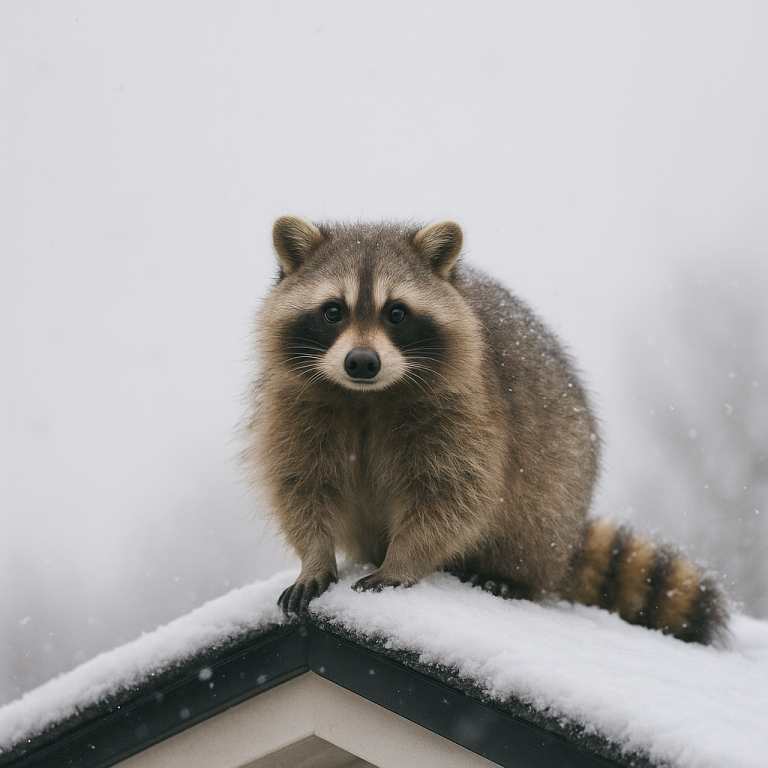
Common Wildlife Issues Hamilton Homeowners Face After the First Snow
Once winter sets in, several wildlife species become more active around homes. Each one creates different types of noise, damage, and risks.
Raccoons Looking for Warm Attics
Raccoons are strong, intelligent, and determined. After the first snowfall, they begin actively seeking shelter where they can stay warm through the cold season. Their preferred location is often the attic, where insulation provides a comfortable nesting environment.
Signs raccoons may be entering your home:
- Heavy thumping, dragging, or slow walking noises in the attic
- Damage to soffits or roof shingles
- Torn or removed vent covers
- Large openings around the roofline
- Insulation pushed aside or flattened
Raccoons can cause significant destruction once inside and are known to create large entry points that may worsen over winter.
Squirrels Nesting in Rooflines and Attics
Squirrels are agile climbers and take full advantage of their ability once snow arrives. They often chew through wooden fascia, plastic vents, or aging aluminum trim to reach attic spaces.
Typical signs of squirrels include:
- Fast scurrying noises during the early morning and late afternoon
- Chewing around roof edges or gable vents
- Small entry holes compared to raccoons
- Droppings around attic corners
- Increased activity on the roof
Squirrels prefer areas with easy access to insulation and rarely settle for outdoor nests once winter begins.
Mice Entering Through Small Foundation Openings
Mice begin searching for warm indoor shelter as soon as temperatures drop. Snow along the foundation often pushes them closer to the home, where they follow cracks or gaps into basements, utility rooms, or wall voids.
Common indicators include:
- Droppings along baseboards or under sinks
- Chewed food packaging
- Scratching inside walls at night
- Tracks in snow along the foundation
- Gnaw marks near garage or basement entry points
Older Hamilton homes with stone or mixed foundations are especially vulnerable to mouse entry during winter.
Rats Moving Indoors When Snow Clears Their Habitat
Rats are less tolerant of freezing temperatures than many people realize. Once snow covers outdoor nests, they begin looking for indoor conditions that offer food and protection. Garages, crawl spaces, and basements become common nesting sites.
Rats often leave:
- Distinct greasy rub marks along walls
- Large droppings
- Chew damage on wires or wood
- Burrow holes near foundations
- Evidence of activity near garbage bins
If you spot a rat around your home during winter, there is likely a nest nearby.
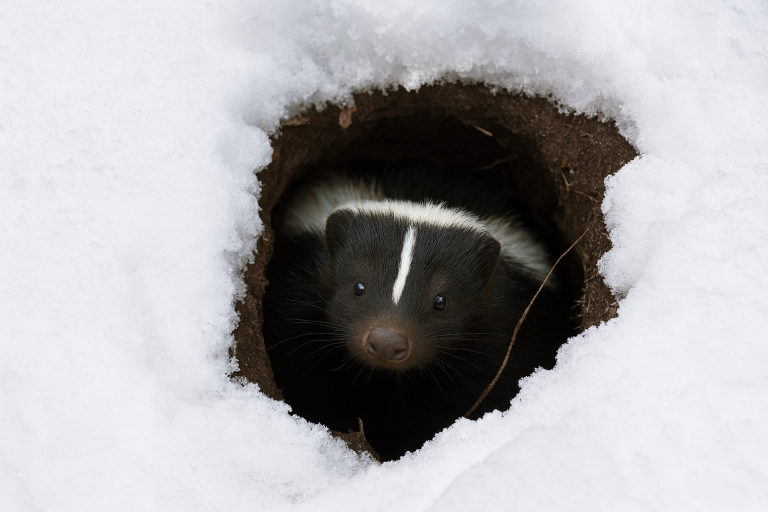
Skunks and Winter Burrowing
While skunks do not fully hibernate, they become less active in extreme cold. They often seek shelter under decks, porches, sheds, or concrete steps. Their digging becomes more noticeable when snow reveals fresh soil around these structures.
Signs skunks are active include:
- Strong, lingering odour around the property
- Disturbed soil near decks or porches
- Tracks leading to burrow entrances
- Noises under floorboards
Skunks often return to the same den areas throughout winter.
Where Winter Wildlife Commonly Enters Hamilton Homes
Understanding common entry points helps homeowners prevent wildlife intrusion before the season worsens.
The Roofline and Soffits
Rooflines experience the most wildlife activity in winter because heat escapes upward, warming the exterior surfaces. Animals follow this heat to weak points such as loose fascia, cracked soffits, or old vents.
Attic Vents and Roof Vents
Vent covers may crack, rust, or loosen over time. Once snow pushes wildlife closer to the roof, raccoons and squirrels can pry these open easily.
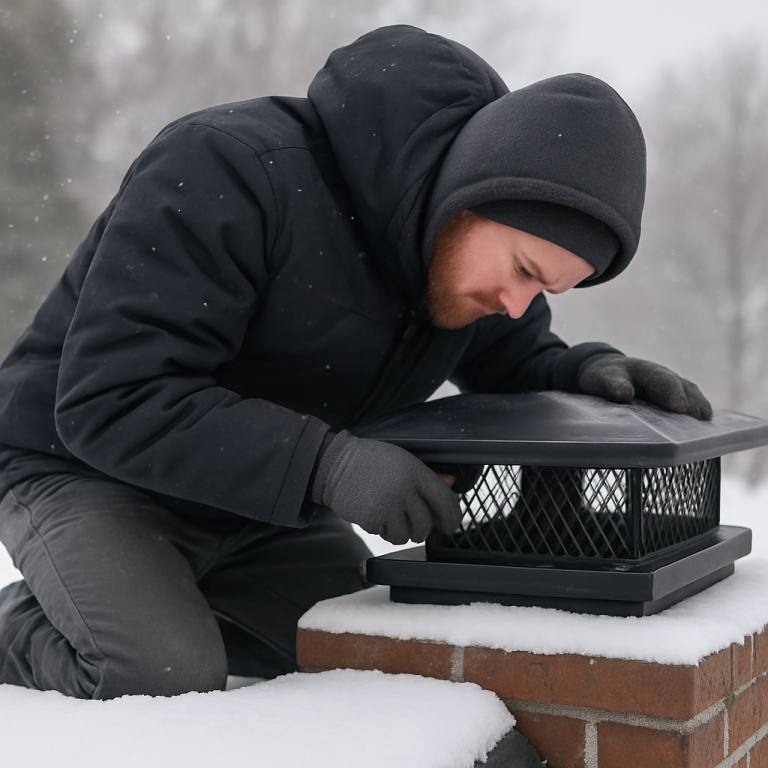
Chimneys
Uncapped chimneys are a major entry point for raccoons and birds seeking shelter.
Garages and Attached Structures
When homeowners leave garage doors open, even briefly, mice and rats take advantage of the warmth. After entering, they often travel through small gaps into the main home.
Foundations
Snow may conceal cracks along the foundation, allowing rodents to slip into basements undetected.
How to Prepare Your Home Before Wildlife Becomes a Problem
Taking steps early in the winter season prevents wildlife from settling into your home.
Inspect the Roof and Attic
Look for loose shingles, torn soffits, or visible gaps. If attic insulation appears disturbed, wildlife may already be present.
Secure Vents and Install Animal-Proof Covers
Metal, not plastic, vents provide proper protection from wildlife capable of chewing or prying.
Seal Foundation Gaps Before Snow Deepens
Look for cracks near utility lines, window wells, and ground-level openings.
Store Garbage Properly
Outdoor bins should remain sealed and ideally kept away from the house. Wildlife relies heavily on human food sources in winter.
Reduce Attractants Around the Property
Remove fallen fruit, secure compost bins, and avoid feeding wildlife or stray animals.
Trim Tree Branches Near the Roof
Branches touching the roof act as bridges for raccoons and squirrels.
What to Do If You Hear or See Wildlife Activity
Once wildlife enters the home, removal should be done professionally. Animals trapped indoors may panic, become aggressive, or cause further damage if approached.
A professional wildlife technician will:
- Inspect the entry points
- Identify the species involved
- Install one-way doors or humane removal devices
- Seal all remaining openings
- Assess insulation damage and contamination
- Provide recommendations to prevent re-entry
Attempting DIY removal can lead to injury or accidental harm to the animal, and in Ontario, wildlife must be handled according to specific regulations.
Protect Your Home After the First Snowfall
Winter wildlife problems can escalate quickly in Hamilton due to the region’s climate, geography, and older homes. Acting early, understanding the warning signs, and securing vulnerable areas helps prevent costly damage throughout the colder months. If you suspect wildlife activity or want peace of mind before deeper winter sets in, professional help is the safest and most effective option.
Elite Pest and Wildlife Removal provides humane, effective wildlife control and prevention services across Hamilton, Ancaster, Dundas, Stoney Creek, Burlington, and surrounding areas.
To schedule an inspection or get help with a winter wildlife problem, call (289) 799-8718 or visit elitepestandwildlife.ca.