
admin · August 5, 2026
Carpenter bees are a common sight in Hamilton during the spring and summer months. While these large, solitary bees are important pollinators, they can become a serious nuisance when they begin drilling into wooden fences, siding, decks, sheds, and other exterior structures. Unlike termites, carpenter bees do not eat wood, but the tunnels they create can weaken wooden surfaces over time and lead to costly repairs if the problem is left untreated.
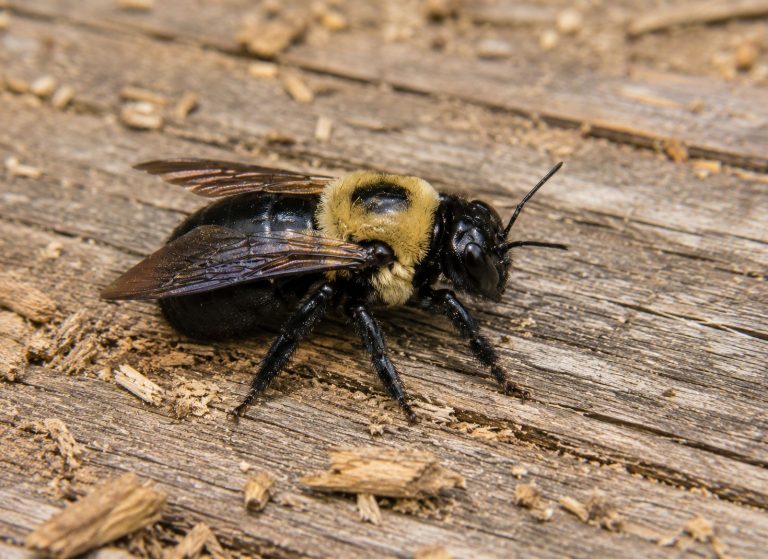
Many homeowners mistake carpenter bees for bumblebees because of their similar size and colouring. However, carpenter bees behave very differently. Instead of living in large colonies, each female creates her own nesting tunnel inside wood, where she lays her eggs and raises the next generation. As the same nesting sites are reused year after year, small holes can turn into extensive networks of tunnels hidden beneath the surface.
Understanding why carpenter bees target your home, how to recognize the signs of an infestation, and what you can do to prevent damage will help protect your fencing, siding, and other valuable wooden structures.
Why Carpenter Bees Are Attracted to Wooden Structures
Carpenter bees seek out untreated or weathered wood because it provides an ideal place to build their nests. Softwoods such as cedar, pine, spruce, and fir are especially attractive, although hardwoods can also be affected.
Fences, wood siding, pergolas, decks, fascia boards, soffits, and outdoor furniture all provide suitable nesting sites. Homes with stained or aging wood are often at greater risk because weathered surfaces are easier for carpenter bees to drill into.
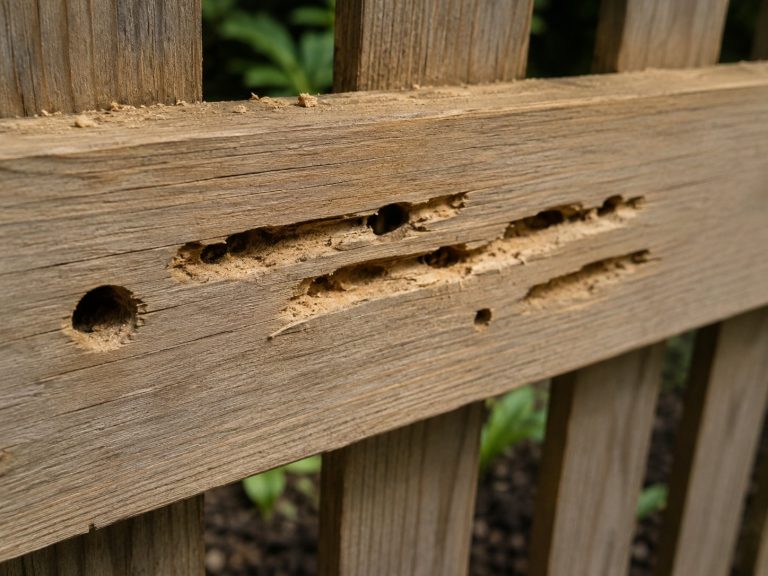
Unlike social bees, carpenter bees are solitary insects. Each female creates her own nest rather than joining a hive. After selecting a suitable piece of wood, she drills a perfectly round entrance hole before turning sharply and tunnelling with the grain of the wood. Inside these tunnels, she creates individual chambers where eggs are laid alongside pollen that will feed developing larvae. Because the tunnels are hidden beneath the surface, damage often goes unnoticed until multiple generations have returned to the same location.
How Carpenter Bees Damage Fencing and Siding
Although a single carpenter bee causes relatively little structural damage, repeated nesting over several years can significantly weaken wood. Each new generation often expands existing tunnels rather than creating entirely new ones. As these galleries grow longer and branch into multiple chambers, the structural integrity of the wood gradually declines.
Wooden fencing is particularly vulnerable because it is constantly exposed to rain, sunlight, and changing temperatures. Moisture and weathering soften the wood, making it easier for carpenter bees to excavate. Wood siding can also become damaged, especially around trim boards, fascia, soffits, and decorative architectural features. If untreated, these tunnels may allow moisture to penetrate deeper into the wood, increasing the risk of rot and further deterioration.
Identifying Carpenter Bee Activity
One of the easiest ways to identify carpenter bees is by observing their behaviour. You may notice large bees hovering around decks, fences, or siding during warm spring and summer days. Males often appear aggressive as they patrol nesting areas, although they do not have stingers and cannot sting people. Female carpenter bees are capable of stinging but are generally non-aggressive unless directly handled.
The most obvious sign of carpenter bee activity is the presence of perfectly round entrance holes approximately the diameter of a fingertip. Fresh sawdust, known as frass, often accumulates beneath newly drilled holes as the bees excavate their tunnels. You may also notice yellowish staining beneath entrance holes caused by bee waste, as well as increased woodpecker activity. Woodpeckers frequently peck into infested wood while searching for carpenter bee larvae, creating additional damage beyond the original tunnels.
Why Carpenter Bees Return Every Year
One reason carpenter bee infestations become worse over time is that they return to familiar nesting locations. Female carpenter bees are attracted to existing tunnels because they require less effort than creating new ones. They often clean out old galleries, extend them, and reuse them for another generation.
Even if the bees disappear at the end of the season, the tunnels remain. Without proper treatment and repair, the same nesting sites often become active again the following spring. This repeated use explains why a few entrance holes can eventually become dozens if preventative measures are not taken.
Common Areas Around Hamilton Homes
Hamilton homeowners frequently encounter carpenter bees in areas where exposed wood receives plenty of sunlight. Privacy fences are among the most common nesting locations because they provide long stretches of untreated wood with minimal disturbance. Deck railings, pergolas, gazebos, sheds, and wooden trim are also popular.
Older homes with original wood siding may experience activity around fascia boards, window trim, soffits, and decorative woodwork. Even painted wood is not completely immune if the finish begins peeling or cracking. Homes located near wooded areas or parks often experience greater carpenter bee activity because natural nesting sites are abundant nearby.
Why Moisture Makes the Problem Worse
Moisture contributes significantly to carpenter bee damage. Rain, snow, and humidity gradually soften exterior wood, making it easier for bees to drill entrance holes. Areas that receive little direct sunlight often remain damp longer, further increasing their attractiveness.
Leaking gutters, overflowing downspouts, or poor drainage around fences can accelerate wood deterioration, making carpenter bee infestations more likely. Regular maintenance that keeps wood dry and well protected helps reduce the risk of nesting.
Preventing Carpenter Bee Damage
Protecting wooden structures begins with routine maintenance. Painting or sealing exposed wood creates a harder surface that carpenter bees are less likely to choose. Regular inspections each spring can identify fresh holes before new generations emerge. Replacing damaged boards promptly prevents bees from expanding existing tunnels, while repairing peeling paint and deteriorating finishes reduces suitable nesting areas.
Keeping trees and shrubs trimmed also makes fences and siding easier to inspect and maintain throughout the season. Although no preventative measure guarantees complete protection, maintaining exterior wood significantly lowers the likelihood of repeated infestations.
Why DIY Treatments Often Fall Short
Many homeowners attempt to eliminate carpenter bees using aerosol sprays purchased from hardware stores. While these products may kill individual bees, they rarely eliminate larvae hidden deep inside wooden tunnels. Simply plugging entrance holes without first treating the nest may trap developing bees inside, or encourage adults to create new entrance holes nearby.
Surface sprays alone also fail to address multiple hidden galleries that may already exist within the wood. Because carpenter bees frequently return to previously used nesting sites, incomplete treatment often results in recurring infestations the following year.
Professional Carpenter Bee Treatment
Professional carpenter bee control focuses on eliminating active bees while preventing future nesting. A thorough inspection identifies active entrance holes, hidden galleries, and vulnerable areas around the property. Specialized products are then applied directly into nesting tunnels where they reach developing larvae and adult bees. After treatment is complete and bee activity has stopped, entrance holes can be properly sealed and repaired to discourage future use.
If necessary, technicians may also recommend replacing severely damaged boards or reinforcing vulnerable wooden structures before the next nesting season. By treating both the active infestation and the underlying causes, professional services provide much longer-lasting results than surface sprays alone.
Why Timing Matters
The best time to address carpenter bee activity is during the spring or early summer when nests are newly established. Treating active tunnels before the next generation emerges prevents additional adults from expanding the infestation. Waiting until late summer or fall allows developing bees to mature, increasing the number of insects that may return the following year. Early treatment also minimizes structural damage by stopping tunnel expansion before it becomes extensive.
When Should You Call a Professional?
You should consider scheduling an appointment with a professional if you notice large bees hovering around fences or siding, discover perfectly round holes in wood, find fresh sawdust beneath wooden structures, or observe woodpeckers repeatedly pecking at the same areas.
The earlier carpenter bee activity is addressed, the easier it is to prevent long-term damage and expensive repairs. Professional inspections are especially worthwhile if carpenter bee activity has returned in previous years or if multiple wooden structures around your property are affected.
Protect Your Hamilton Home From Carpenter Bees
Carpenter bees can cause significant damage when they begin nesting in your fencing, siding, decks, and other wooden structures. Repeated tunnelling weakens wood, attracts woodpeckers, and increases repair costs if left untreated. Elite Pest & Wildlife provides professional carpenter bee treatments throughout Hamilton and the surrounding communities. Our experienced technicians identify active nesting sites, apply targeted treatments, and help protect your wooden structures from future infestations. Whether you’re dealing with carpenter bees in a backyard fence, cedar siding, pergola, or deck, we offer safe and effective solutions designed for long-term protection.
If you’ve noticed carpenter bees around your home or discovered fresh holes in your wooden fencing or siding, don’t wait for the damage to spread. Contact Elite Pest & Wildlife to schedule a professional carpenter bee inspection and keep your property protected all season long.