
Skunks are a common nuisance across many Canadian neighbourhoods, especially during the fall and early spring when they search for safe places to shelter. One of the most attractive locations for them is the dark, protected space beneath decks. The combination of warmth, privacy and loose soil makes the area ideal for digging and nesting. Once a skunk settles under a deck, homeowners often experience persistent digging, strong odours and night-time activity that can disturb pets and family routines.
Preventing skunks from getting under your deck starts with understanding why they’re drawn to the space, how to identify early signs of activity and what practical steps you can take to secure your property. With the right preventative measures, you can reduce the risk of skunks turning your deck into a long-term den site.

Why Skunks Choose Decks as Shelter
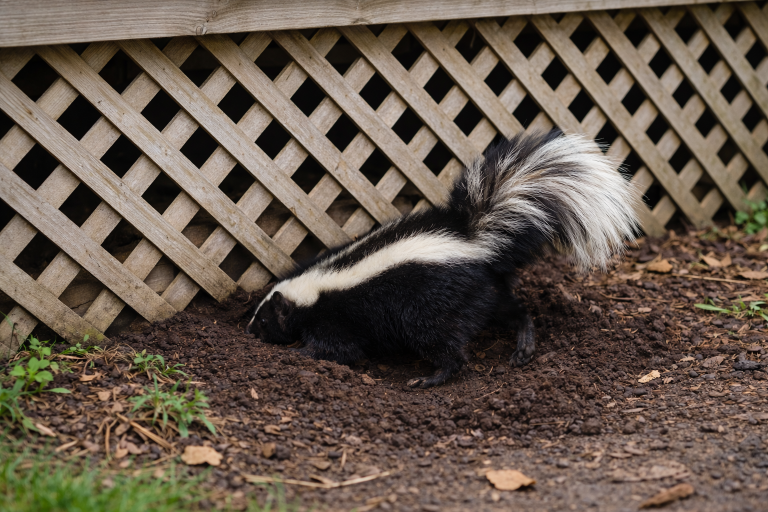
Skunks are opportunistic animals. They seek out places that are warm, protected from predators and easy to access. Decks offer all of these features. The space underneath is usually quiet, undisturbed and shaded, which makes it an ideal location for raising young or resting during the day. Loose soil and slight gaps around the deck’s perimeter allow skunks to burrow with minimal effort.
Seasonal behaviour also plays an important role. During late fall, skunks begin searching for insulated areas to shelter from cold winds and winter conditions. In early spring, they look for safe den sites to prepare for birthing season. A deck provides both. Because of this, homeowners often see increased digging activity during these times of year. Understanding these patterns makes prevention easier, as you can take steps at the right time to make your property less appealing.
Early Signs Skunks Are Digging Under Your Deck
Recognizing the signs early helps prevent a minor nuisance from turning into a full den site. Most homeowners first notice patches of disturbed soil around the base of the deck. Skunk burrow entrances are typically small, about the size of a softball, and may be surrounded by loose dirt or tufts of grass. Unlike raccoons, which tend to create larger openings, skunks dig narrow entry holes that slope down into the shelter space.
Another common sign is the smell. Skunks don’t spray unless threatened, but even without spraying, their odour lingers faintly in areas where they travel frequently. If a strong smell appears suddenly, it may indicate that a skunk felt threatened by a pet or loud noise near the deck. Scratching or rustling sounds can also be clues. Because skunks are mostly active at night, you may hear movement under the deck after dark. Pets, especially dogs, often detect skunk activity long before their owners do. If your dog becomes fixated on a specific area of the yard or deck, it could indicate burrowing activity.
When these signs appear, prevention becomes urgent. Delaying action allows skunks to deepen their burrow, create multiple entrances and potentially raise young under the structure.
How to Prevent Skunks from Getting Under Your Deck
Effective prevention is built on a combination of exclusion, property maintenance and reducing attractants. While every yard is different, the following practices create strong barriers that discourage skunks from settling beneath decks.
Secure the Perimeter with a Skunk-Proof Barrier
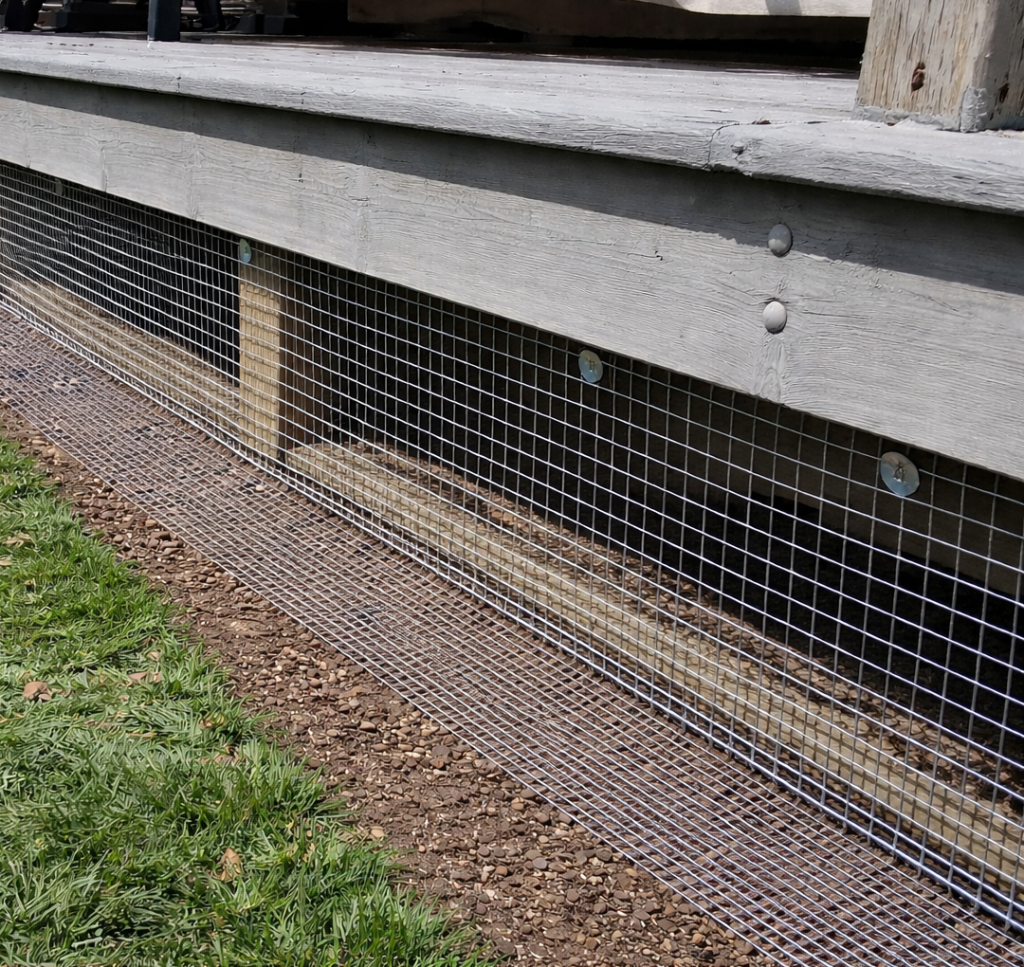
The most effective long-term solution is installing a proper exclusion barrier. This usually involves digging a trench around the entire perimeter of the deck and attaching galvanized steel mesh or hardware cloth. The mesh should extend downward into the trench and then bend outward at the bottom to create an “L” shape. This prevents skunks from digging underneath because they encounter the buried mesh before reaching open soil.
The barrier must be installed tightly against the deck to eliminate gaps. Even a small opening is enough for a skunk to squeeze through or enlarge. Some homeowners attempt to block openings with loose boards or rocks, but skunks easily push these aside. A professionally installed exclusion system offers far more durability and creates a permanent defence.
Remove Food Sources Around the Yard
Skunks are motivated by food. If your yard provides a consistent source of nutrition, such as insects, fallen fruit or accessible garbage, they are more likely to stay close to your deck. Simple changes can make the area far less appealing. Securing garbage bins, cleaning up pet food, removing fallen fruit and reducing sources of insects are small actions that make a significant difference.
Many homeowners don’t realize that grubs are one of the most common attractants for skunks. Skunks love grubs and will dig small circular holes throughout the lawn to reach them. Treating your lawn for grubs reduces the incentive for skunks to roam your property in the first place.
Trim Vegetation and Remove Debris Near the Deck
Tall grass, shrubs and decorative features like stacked firewood create hiding spaces near the deck. Skunks prefer areas with cover because it reduces the chance of being seen by predators. Keeping vegetation short and clearing clutter discourages skunks from approaching the deck in the first place.
Homeowners should also ensure that mulch and soil beds near the deck do not sit directly against the structure. These areas are easy for skunks to dig into and can provide a direct path under the deck.
Use Light and Activity as a Deterrent
Skunks naturally avoid well-lit and high-activity areas. Motion-activated lights can be an effective deterrent because they startle the animal and interrupt its approach. These lights are especially useful during seasons when skunks are most active, as the sudden illumination encourages them to move elsewhere.
While lights are not a permanent solution, they work well as part of a layered prevention strategy. Over time, skunks learn that the area is unsuitable for shelter and stop returning.
Ensure the Deck Structure Is Maintained
Over time, decks can shift, warp or develop small gaps that create easy access points. Regular inspection helps identify areas that need tightening, sealing or reinforcement. Damaged lattice, loose boards or broken panels should be repaired quickly to maintain a secure perimeter.
If your deck has an open lattice skirt, consider upgrading it to a more durable barrier. Lattice alone is rarely strong enough to prevent digging. Adding reinforced mesh behind the lattice provides both durability and aesthetic appeal.
How to Safely Remove A Skunk Already Under Your Deck
Preventing skunks is much easier than removing them once they’re settled. If you discover a skunk living under your deck, avoid trying to remove it yourself. Skunks spray accurately, and their spray can cause serious discomfort, especially if it gets into the eyes. They also become defensive when young are present.
Professional wildlife technicians use humane methods to remove skunks safely. They can determine whether babies are present, identify additional entrances and install one-way doors that allow the skunk to exit without being able to return. Once the animal is gone, a technician can secure the area properly to prevent future entry.
Attempting homemade deterrents, such as flooding the burrow or placing strong smells near the entrance, can cause more problems. These methods can trap the animal, cause property damage or push the skunk deeper under the deck.
Why Professional Exclusion Services Work Best
Professional wildlife removal teams have the tools and experience to seal decks safely and effectively. They know how to create a continuous barrier, identify weak points and install mesh deep enough to prevent digging. These details matter because skunks will exploit any inconsistency along the perimeter.
Professionals also understand the timing needed for effective removal. For example, during spring when babies are present, removal methods must be gentle to avoid leaving young animals behind. A trained technician can assess the situation and create a plan that protects both the home and the animals.
Another benefit of professional exclusion is longevity. A properly installed barrier can last many years, eliminating the need to repeatedly chase away skunks or repair new burrows.
Long-Term Prevention and Seasonal Maintenance
Once your deck is secured, maintaining the surrounding yard helps sustain long-term success. Inspect the perimeter each spring and fall for signs of digging. Clear out vegetation that touches the deck and keep soil levels at least a few inches below the deck boards to avoid creating a natural ramp. These small seasonal tasks reinforce the barrier and prevent new skunks from attempting to settle.
Some homeowners choose to have a wildlife professional perform an annual inspection, especially if their yard borders ravines, wooded areas or open fields where skunk activity is common. Seasonal checkups catch early digging before it becomes a problem.
Leave It To The Professionals
Skunks digging under your deck can be a persistent and stressful issue, but with the right combination of exclusion, maintenance and habitat management, you can protect your yard from becoming a skunk den site. Taking action before the problem starts is always easier than dealing with a full burrow. Whether you choose to install a buried barrier yourself or prefer the help of a professional wildlife technician, prevention offers peace of mind and protects both your property and the animals. Elite Pest & Wildlife Removal is ready to help with humane exclusion methods and prevention to keep skunks out. Contact our team today to book an inspection.