
Discovering rodent droppings anywhere in your home can be unsettling, but finding them in the basement or kitchen is especially concerning. These areas provide mice and rats with exactly what they need to survive with warmth, shelter, and easy access to food. Droppings are one of the earliest and most reliable signs that rodents are active in your home, and acting quickly can prevent the problem from becoming far more serious.
Whether you’ve found a small cluster under the kitchen sink or a trail along your basement floor, the steps you take next can determine how fast you get the situation under control. This guide explains what to do, how to clean up safely, what the droppings tell you, and when to call a professional for help.
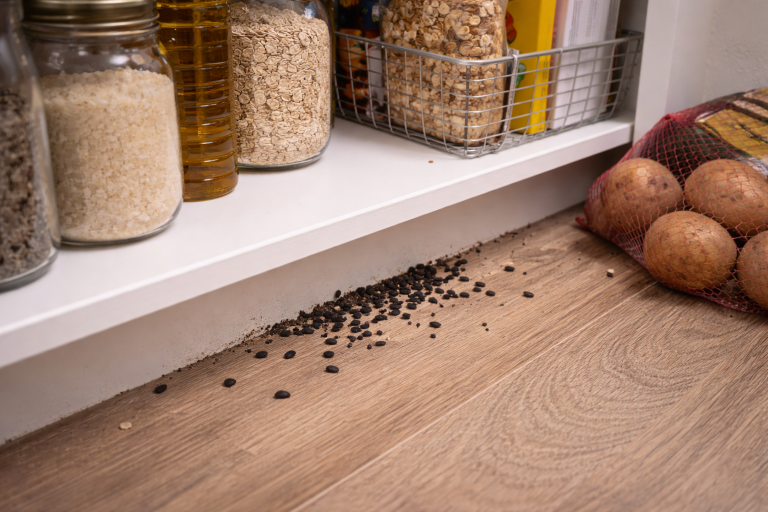
Why Droppings Matter
Rodent droppings may be small, but they reveal a great deal about what’s happening behind the scenes. Mice and rats leave droppings where they eat, nest, and travel, which means the location and amount of droppings help identify the level of activity in your home.
Fresh droppings indicate active rodents, while older ones point to past activity that may still be ongoing. In kitchens, droppings often appear near food sources such as cupboards, pantries, and behind appliances. In basements, they tend to collect near utility rooms, laundry areas, furnace rooms, or long wall edges that rodents use as travel routes.
Ignoring droppings allows the infestation to grow. Rodents reproduce quickly and can spread to new rooms in a matter of days, so early action is essential.
Avoid Sweeping or Vacuuming Droppings
Your first instinct may be to grab a broom or vacuum. Avoid this, as sweeping or vacuuming can push harmful particles into the air. Rodent droppings may contain bacteria, and disturbing them without proper safety measures exposes the household to unnecessary risk.
Instead, take a moment to properly prepare for cleanup. Wear gloves, a mask if available, and avoid creating dust.
How to Clean Up Droppings Safely
Cleaning must be done carefully and thoroughly. Start by mixing a disinfectant or using a household cleaner containing bleach. Lightly spray the droppings and the surrounding area until everything is damp. This prevents particles from becoming airborne.
After the area is soaked, use disposable paper towels to pick up the droppings. Place them in a sealed plastic bag and throw it in an outdoor garbage bin. Once the droppings are removed, disinfect the entire area again. Wash your hands well even if you wore gloves.
This process is safe for cleaning small amounts of droppings, but if the droppings appear in many rooms or are heavily concentrated, it’s better to let a technician handle the cleanup as part of a full rodent treatment.
Identify Where the Rodents Are Coming From
Droppings are a starting point, not the full story. To stop the issue at its source, you’ll need to determine how the rodents are entering your home. Mice can squeeze through openings the size of a dime, so entry points may be smaller than you expect.
In kitchens, rodents often enter through gaps around plumbing under the sink, poorly sealed water lines behind the dishwasher, or openings along the baseboards behind cabinets. In basements, entry points are often found along foundation cracks, gaps where utility lines pass through walls, open dryer vents, damaged door sweeps, or unsealed garage entry doors.
Follow the trail of droppings to see if it leads to a hole, gap, or crack. However, keep in mind that rodents rarely use only one entry point. Many homes have multiple openings that require sealing.
Check for Additional Signs of Activity
Droppings alone confirm that rodents are active, but a closer inspection can reveal how severe the issue may be.
Listen for scratching or shuffling noises behind walls or ceilings, especially at night. Look for gnaw marks on food packaging or on the edges of wooden baseboards. Move appliances and check behind them for trails, shredded nesting materials, or damaged insulation. In basements, examine utility rooms and furnace areas for shredded paper or fabric.
If you find oily smudges along baseboards or around openings, rodents may be using the same route repeatedly, leaving oils from their fur behind. These signs help technicians determine where to place traps or bait stations.

Remove Food Sources Immediately
Kitchens are hotspots for rodent activity because they provide easy access to food. After cleaning droppings, take steps to remove anything that might attract rodents.
Store dry goods like pasta, cereal, rice, and pet food in sealed containers. Avoid leaving food or dirty dishes out overnight. Wipe down countertops and sweep crumbs from floors regularly. Pay attention to small spaces where crumbs can accumulate, such as behind toasters or under the stove.
Basements can also attract rodents if they contain stored snacks, bird seed, or pet food. Seal these items or move them to another location. Reducing food access forces rodents to look for alternative sources, making traps more effective.
Declutter Areas Where Droppings Are Found
Clutter provides rodents with hiding spots and nesting material. If droppings appear in your basement, reduce clutter around walls, storage boxes, or shelving. Keep stored items off the floor and avoid leaving loose paper or fabric in piles, as these materials are often used for nests.
In kitchens, reorganize below-sink spaces and remove unnecessary items that may provide hiding areas. The more open and clean these spaces are, the easier it becomes to spot early activity.
Consider Trap Placement for Small-Scale Issues
If droppings appear in only one or two areas, traps may help control a small population. Snap traps placed along walls, behind appliances, or under sinks can be effective when used correctly. However, traps must be placed in the exact locations rodents use as travel routes. Unfortunately, these areas aren’t always obvious to homeowners.
For larger infestations, traps alone may not work. Mice reproduce quickly, and new mice may enter through unsealed gaps even as you catch others. If droppings reappear after trapping, or if traps remain untouched for days, the infestation may be more complex than expected.
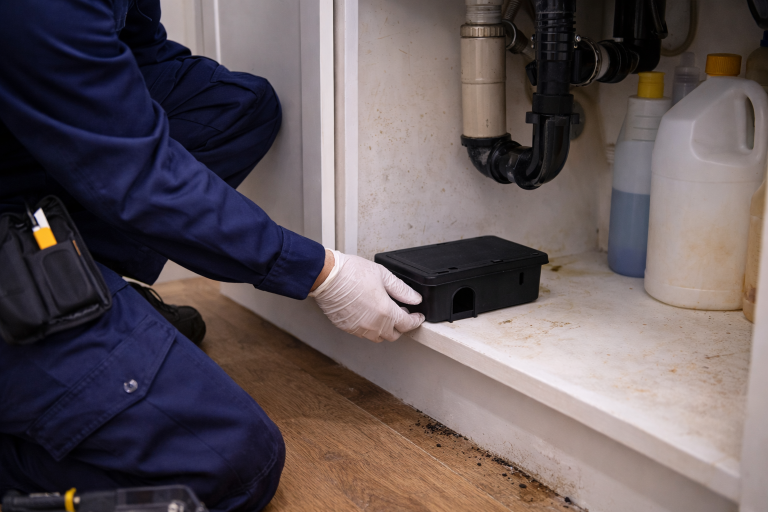
Why DIY Methods Often Fail
Droppings in kitchens or basements rarely indicate a single mouse. Homeowners often underestimate how many rodents are present, or how widespread their activity may be. Rodents travel through walls, use hidden entry points, and establish nests in areas you may never see without a professional inspection.
Store-bought traps or baits often aren’t strong enough to control a full infestation. Without sealing the home, new rodents will continue entering even if you catch several. This is why many homeowners see droppings return weeks or months after DIY efforts.
When to Call a Professional
Calling a pest control technician is the best option when droppings are:
- Appearing in multiple rooms
- Reoccurring after cleaning
- Found alongside strong odours
- Accompanied by scratching noises
- Found in large clusters or long trails
- Present in kitchens where food safety is a concern
A professional can identify all entry points, locate hidden nests, and install commercial-grade bait stations and traps. They can also complete exclusion work to seal openings and prevent new rodents from entering.
In serious infestations, droppings may be spread throughout wall voids, attics, crawl spaces, and utility rooms. These areas require proper equipment and expertise to treat safely.
Protect Your Home and Prevent Future Droppings
Finding rodent droppings in your basement or kitchen isn’t just unpleasant; it’s a clear sign that rodents are active inside your home. Fast action helps prevent property damage, food contamination, and the rapid spread of an infestation. After cleaning the droppings, removing food sources, reducing clutter, and checking for signs of more activity, the most important step is identifying how rodents got inside in the first place.
If you want the problem handled properly and permanently, Elite Pest and Wildlife Removal provides full rodent inspections, baiting programs, exclusion work, and long-term prevention for homes across Hamilton and surrounding areas.
To schedule a service or speak with a technician, call 226-208-7793 or visit elitepestandwildlife.ca.