
Over the past several years, homeowners in Hamilton’s surrounding suburbs have been noticing a clear trend: pest problems are becoming more frequent, more persistent, and more difficult to control. Areas like Stoney Creek and Binbrook, once considered lower risk for infestations, are now seeing rising activity from rodents, insects, and wildlife. From mice in new subdivisions to raccoons and skunks damaging properties at the edge of farmland, pest pressure is increasing across these communities.
This rise is not happening by accident. A combination of rapid development, environmental changes, and shifting pest behavior has created ideal conditions for infestations to thrive. Understanding why these issues are increasing is the first step toward protecting your home and preventing long-term damage.
Rapid Development Is Disrupting Natural Habitats
One of the biggest contributors to pest problems in Stoney Creek and Binbrook is ongoing residential development. Large sections of farmland, wooded areas, and natural corridors have been cleared to make room for new homes, roads, and commercial spaces. While this growth is good for the community, it displaces wildlife and rodents that previously lived undisturbed.
When these animals lose their natural shelter, they look for the next safest option. Homes provide warmth, food, and protection from predators, making them an easy target. Mice and rats quickly move into new neighborhoods, often before homeowners even realize the risk. Wildlife such as raccoons, squirrels, and skunks adapt just as quickly, nesting in attics, sheds, decks, and garages. In many cases, pest activity increases immediately after construction begins and continues long after the neighbourhood is completed.
Newer Homes Are Not Pest Proof
There is a common misconception that newer homes are less likely to experience pest issues. In reality, many new builds are just as vulnerable, and sometimes more so. Modern construction methods often prioritize speed and efficiency, which can leave behind small gaps, unfinished seams, and weak points along foundations, siding, and rooflines.
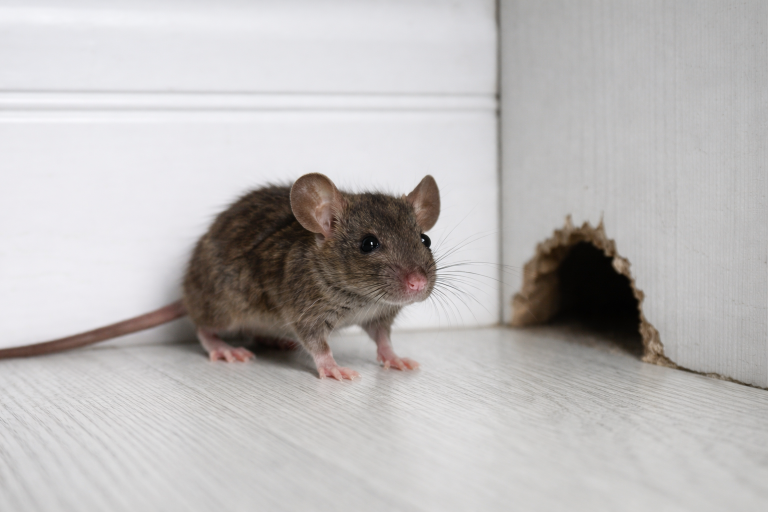
Mice only need an opening the size of a dime to enter a home. Small gaps around utility lines, vents, weeping tiles, and brick transitions are common entry points. In newer subdivisions, pests often move from house to house once they establish themselves in the area, turning isolated problems into neighbourhood-wide issues.
Without professional inspection and sealing, these small vulnerabilities can quickly become ongoing infestations.
Increased Rodent Pressure in Suburban Areas
Rodents are one of the fastest-growing pest problems in Hamilton’s suburbs. Mild winters, abundant food sources, and easy access to shelter have allowed mouse and rat populations to grow steadily. In areas like Binbrook, where homes border open land or agricultural fields, rodents naturally migrate toward residential areas as seasons change.
Garages, sheds, basements, and crawl spaces are especially attractive during fall and winter. Once inside, rodents reproduce quickly. A small mouse problem can turn into a serious infestation in a matter of weeks, leading to contaminated insulation, chewed wiring, and damage to stored belongings. Rodents are also excellent climbers, meaning fences, decks, and exterior walls do little to stop them from reaching rooflines and attic entry points.

Wildlife Is Becoming More Comfortable Around Homes
Raccoons, squirrels, and skunks are no longer limited to rural environments. These animals have adapted extremely well to suburban living, particularly in areas with green space, ravines, and backyard food sources. Bird feeders, unsecured garbage bins, pet food, and compost piles all contribute to increased wildlife activity.
Once wildlife becomes comfortable around a property, they begin exploring entry points. Soffits, roof vents, fascia boards, and attic openings are common targets. Female raccoons and squirrels are especially aggressive during nesting season and will damage building materials to gain access.
In Stoney Creek and Binbrook, wildlife issues are increasingly reported in both older homes and newer developments, proving that no neighbourhood is immune.
Climate Changes Are Extending Pest Seasons
Weather patterns in Southern Ontario have shifted noticeably. Milder winters and longer warm seasons allow pests to remain active for more of the year. Insects such as ants, spiders, and cockroaches are surviving winters that would previously reduce their populations.
This extended activity means pests have more time to breed and spread. Homes that once only saw seasonal issues are now dealing with year-round infestations. Rodents, in particular, benefit from milder conditions, as cold weather is no longer a reliable population control factor. As climate conditions continue to change, pest management is becoming a necessary part of home maintenance rather than an occasional concern.
Poor Waste Management Attracts Pests
Suburban neighbourhoods often struggle with waste management issues that unintentionally attract pests. Overflowing garbage bins, recycling left overnight, and compost stored improperly create reliable food sources. Once pests associate an area with easy access to food, they will continue returning.
In dense subdivisions, pests rarely stay confined to one property. A single unsecured garbage bin can contribute to rodent or wildlife activity across multiple homes. This is especially problematic in townhome complexes and closely spaced residential areas common in Stoney Creek developments. Proper waste storage plays a major role in pest prevention, but it must be combined with physical exclusion to be effective.
Aging Infrastructure in Growing Communities
While some parts of Hamilton’s suburbs feature newer homes, others include aging infrastructure, older drainage systems, and deteriorating foundations. As neighbourhoods expand, older properties often become surrounded by development, increasing pest pressure on structures that may already have vulnerabilities.
Cracked foundations, settling concrete, aging brickwork, and worn siding create perfect access points for pests. Without regular inspections, these issues often go unnoticed until an infestation becomes obvious. Preventative maintenance is especially important in areas experiencing rapid growth, as pest populations are actively searching for new shelter.

Why Professional Pest Control Matters More Than Ever
DIY solutions rarely address the root cause of infestations. Traps, repellents, and store-bought products may reduce visible activity temporarily, but they do not stop pests from entering in the first place. Without proper inspection, identification of entry points, and exclusion work, pests will continue returning.
Professional pest control focuses on long-term solutions. This includes identifying how pests are getting inside, sealing vulnerable areas, removing attractants, and implementing targeted treatment plans. In suburban areas like Stoney Creek and Binbrook, this approach is essential due to the variety of pests and environmental factors involved.
Take Control Before Pest Problems Escalate
Pest problems in Hamilton’s suburbs are not slowing down. As development continues and environmental conditions change, proactive prevention is the most effective way to protect your home. Regular inspections and professional treatment can stop small issues from becoming costly repairs and ongoing stress.
If you’re noticing increased pest activity or want to prevent problems before they start, Elite Pest and Wildlife Removal is here to help. Our team understands the unique challenges facing Stoney Creek, Binbrook, and surrounding Hamilton communities. We provide thorough inspections, effective treatments, and long-term exclusion solutions designed for local conditions. Book an inspection today and take the first step toward a pest-free home before small problems turn into major infestations.