
admin · August 11, 2026
Finding bats in your attic can be alarming. For many homeowners, the first instinct is to locate the opening they are using and seal it immediately. While closing an entry point might seem like the fastest way to solve the problem, doing so at the wrong time of year can make the situation significantly worse.
Bat maternity season is a particularly important consideration when dealing with bats in Hamilton and throughout Ontario. During this period, female bats gather in warm, protected areas to give birth and raise their young. Attics, rooflines, soffits, wall cavities, and other sheltered areas of homes can provide ideal maternity roosting locations.
If an entry point is sealed while young bats are still unable to fly, adult bats may become locked outside while their pups remain trapped inside. Alternatively, bats may be accidentally sealed inside the structure. Both situations can create animal welfare concerns and turn a relatively contained attic problem into a much more complicated issue inside the home. Understanding bat maternity season and using the correct exclusion process is essential for resolving bat activity safely and effectively.
What Is Bat Maternity Season?
Bat maternity season is the period when female bats gather in colonies to give birth and care for their young. Rather than raising their pups individually, females often congregate in maternity roosts that provide the warmth and shelter needed for developing bats. In Ontario, this typically occurs during the warmer months. Exact timing can vary depending on the bat species, weather, temperature, and location. Because young bats are initially unable to fly, they depend entirely on their mothers for food.
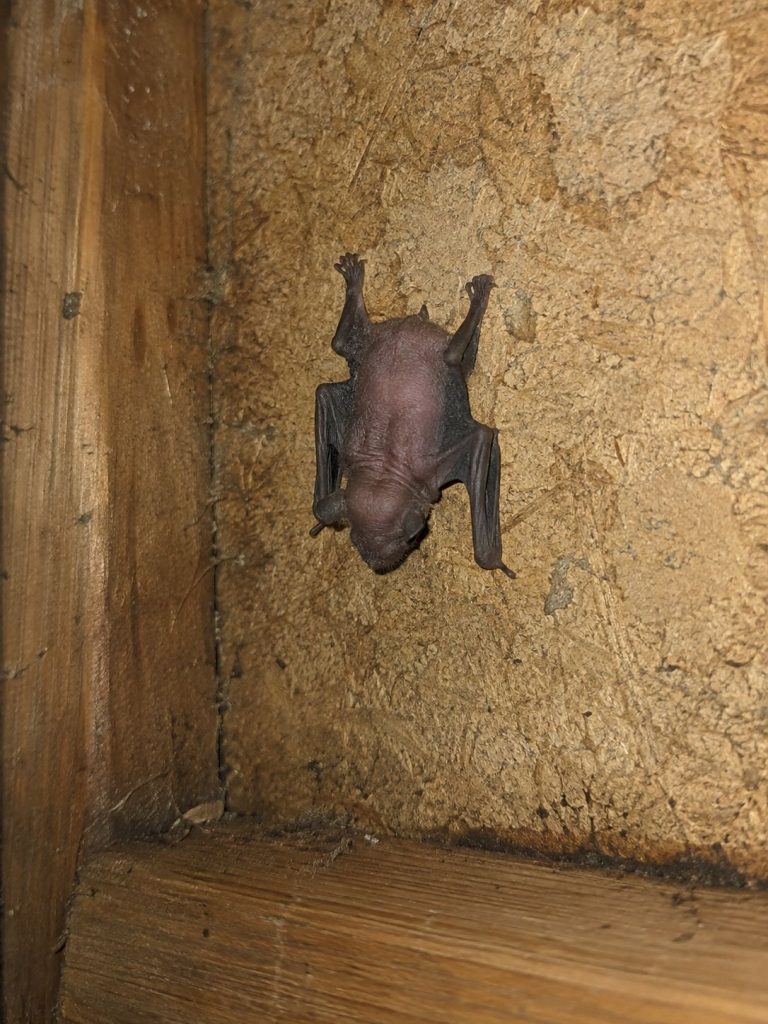
During the evening, adult females leave the roost to feed on insects. Their pups remain behind until the adults return. This behaviour is one of the main reasons sealing a suspected bat opening without first determining what is happening inside can cause serious problems.
Why Bats Choose Attics for Maternity Roosts
Attics offer many of the conditions bats naturally seek when establishing a maternity colony. During summer, attics can become extremely warm. Although this heat may be uncomfortable for homeowners, it can create favourable conditions for developing young bats. Attics are also dark, relatively quiet, protected from weather, and inaccessible to many predators.
Bats may enter through very small gaps around rooflines. They do not need to chew their way into a building like squirrels or raccoons. Instead, they take advantage of openings that already exist. Common access areas include gaps around soffits and fascia, openings around roof vents, spaces along flashing, gaps where different roof sections meet, damaged siding, loose trim, and openings around chimneys. Because these gaps can be extremely small, homeowners may have difficulty identifying the exact location bats are using.
What Happens If You Seal a Bat Entry Point Too Early?
The biggest concern during maternity season is separating adult bats from flightless young. Imagine that several female bats leave an attic shortly after sunset to feed. A homeowner sees them leave, finds the opening, and seals it. The adults can no longer return, but their pups may still be inside. Young bats that cannot fly have no way to escape.
The opposite can also happen. If the opening is sealed while adult bats are still inside, they may begin searching throughout the structure for another way out. This can push bats away from their normal roosting area and into wall cavities, ceilings, ventilation systems, or living spaces. Instead of solving the problem, premature sealing can spread bat activity throughout the building.
Trapped Bats Can Create Additional Problems
When bats lose access to their established exterior opening, their behaviour becomes unpredictable. A bat that normally spends its time inside an attic may begin travelling through gaps around plumbing, wiring, vents, or framing while searching for another exit. If those pathways connect with the occupied portion of the home, homeowners may suddenly find bats flying inside bedrooms, hallways, or other living spaces.
There is also the possibility of bats dying inside inaccessible areas if they cannot escape. This can lead to unpleasant odours and may attract insects. Proper exclusion avoids these problems by allowing bats to leave naturally rather than trapping them.
Why Bat Exclusion Is Different From Simply Sealing a Hole
Professional bat removal involves more than locating a hole and filling it. A proper exclusion strategy begins with an inspection of the building. The technician examines the roofline, soffits, fascia, vents, flashing, siding, and other potential access points to determine where bats are entering and whether additional openings are present.
Once the timing is appropriate, one-way exclusion devices can be installed at active entry points. These devices allow bats to leave the structure but prevent them from getting back inside. After the bats have exited, the exclusion devices can be removed and the remaining openings permanently sealed. This approach solves the problem without unnecessarily trapping animals inside the home.
Bat Removal Laws in Ontario
Bat removal in Ontario must be approached carefully because several native bat species receive legal protection, including species classified as endangered under provincial conservation law. Homeowners should avoid harming, trapping, or improperly excluding bats, particularly when a maternity colony may be present. Ontario guidance recommends avoiding exclusion from mid-May through mid-August, when flightless pups may be inside a roost and could die if separated from their mothers. Instead, exclusion is generally completed when young bats are capable of flying, using one-way devices that allow bats to leave before entry points are permanently sealed.
Secondary Entry Points Matter Too
One of the biggest mistakes homeowners make when attempting DIY bat removal is focusing only on the most obvious opening. Bats are capable of using very small structural gaps. A house may therefore have several potential access points even if only one appears active.
If the primary opening is sealed but nearby gaps remain accessible, returning bats may simply move a short distance and enter somewhere else. Professional bat exclusion looks at the entire vulnerable area rather than treating a single visible hole. Potential secondary openings can be secured as part of the exclusion process so bats cannot simply relocate to another section of the roof.
Signs You May Have a Bat Maternity Colony
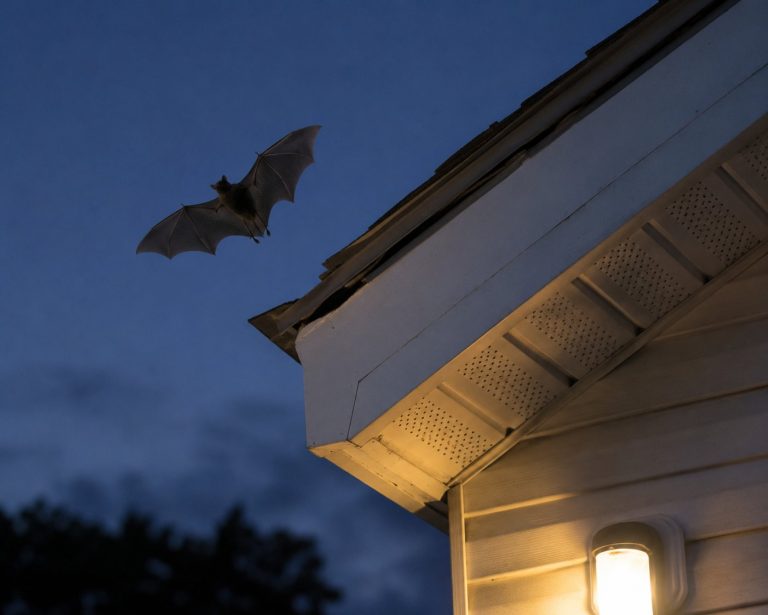
Bat activity is not always obvious during the day because the animals generally remain hidden in their roost. One of the clearest signs is seeing multiple bats leaving the same part of the house around dusk. Homeowners may also hear faint scratching, squeaking, or rustling noises coming from an attic, wall, or ceiling.
Bat guano may accumulate beneath an exterior entry point or inside the attic. Guano is usually dark and pellet-shaped and may build up below areas where bats regularly roost. Dark staining around a small roofline opening can also develop after repeated use. If you suspect a maternity colony, avoid blocking the opening until the situation has been properly assessed.
Why an Evening Bat Watch Can Be Helpful
Because bats usually leave their roost around dusk, watching the exterior of the home in the evening can provide useful information. A bat watch can help identify which section of the roofline is being used and whether multiple bats are emerging from the structure.
However, seeing bats leave does not necessarily mean the attic is empty. During maternity season, young bats may remain inside while their mothers are feeding. This is why observing adults leave should never be treated as confirmation that an entry point can immediately be sealed.
Bats Are Beneficial Wildlife
Although bats can create problems when they roost inside homes, they play an important role in Ontario’s ecosystem. Bats consume large numbers of flying insects and contribute to natural insect population control. The objective of professional bat removal is therefore not to harm the animals but to safely encourage them to leave buildings and prevent them from returning.
Exclusion accomplishes this by separating the bats from the structure without relying on trapping or unnecessary handling. Once the building has been properly secured, the bats can continue using natural roosting areas elsewhere.
What About Bat Guano in the Attic?
Long-term bat activity can leave guano and urine inside an attic. The amount of contamination varies considerably. A small number of bats that have only recently entered may leave relatively little waste, while an established colony can create significant accumulations beneath its roost.
Bat waste should be evaluated carefully, particularly when large amounts have accumulated or insulation has become contaminated. Cleaning the attic before resolving the entry problem is usually ineffective because bats can simply return and contaminate the area again. The priority should be determining how bats are entering, completing exclusion at the appropriate time, and securing the structure. Cleanup can then be addressed once the wildlife issue has been resolved.
Why DIY Bat Removal Can Be Difficult
Bat entry points are often located high along rooflines, making inspection difficult and potentially dangerous for homeowners. Even when an opening is visible from the ground, determining whether it is the primary entrance is another challenge. Bats may use gaps that are almost invisible unless the roofline is inspected closely.
DIY sealing also carries the risk of closing openings while bats remain inside. A professional wildlife technician understands where to look for signs of bat activity and can develop an exclusion plan based on the structure of the home and the time of year.
Preventing Bats From Returning
Once bats have been successfully excluded, prevention becomes the priority. The original entry point needs to be permanently secured, but nearby vulnerabilities should also be addressed. Small roofline gaps, loose flashing, damaged soffits, deteriorated fascia, and poorly protected vents can all provide future access.
A thorough exclusion strategy focuses on making the structure difficult for bats to re-enter rather than simply repairing the most obvious opening. Regular exterior inspections can also help homeowners identify new vulnerabilities caused by storms, aging materials, renovations, or normal building movement.
What Should You Do If You Find Bats During Maternity Season?
If you discover bats in your attic during the summer, avoid immediately sealing the opening. Instead, keep track of where you are seeing activity and contact a wildlife professional for an inspection. The technician can assess the suspected entry points, determine the extent of the activity, and recommend when exclusion work can safely proceed.
If a bat enters an occupied room, avoid handling it directly. Situations involving possible contact with a person or pet should be treated differently from ordinary attic activity and may require guidance from local public health or animal health professionals. For an established attic colony, patience and correct timing are far more effective than rushing to close the first opening you find.
Protect Your Home With Professional Bat Exclusion
Finding bats in your attic does not mean you should immediately start sealing holes. During bat maternity season, closing an active entry point can separate mothers from their pups, trap bats inside the structure, and create a much more difficult wildlife problem. Successful bat control requires careful inspection, appropriate timing, one-way exclusion, and proper sealing of vulnerable areas once the bats can safely leave. Addressing the entire roofline also helps prevent the colony from simply finding another way back inside.
If you’ve noticed bats leaving your roofline, heard activity in your attic, or discovered bat guano around your home, Elite Pest & Wildlife can help. Our team provides professional bat inspections and exclusion solutions designed to remove bats from structures while helping prevent future entry.
Reach out to our team at Elite Pest & Wildlife to book a bat inspection in Hamilton and get a professional plan for safely securing your home.