
admin · April 27, 2026
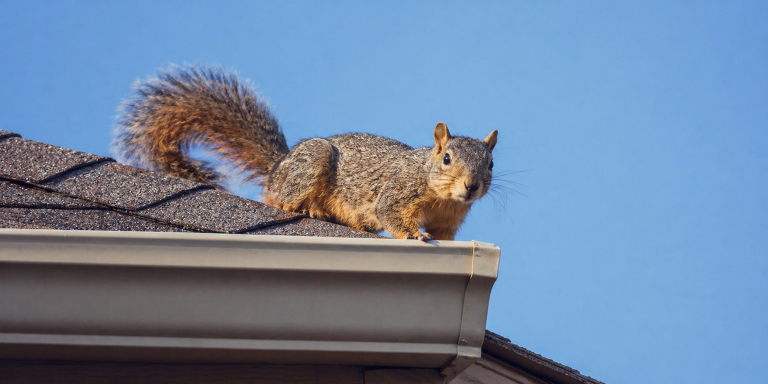
Squirrels may look harmless in the yard, but when they move into your home, they become a serious problem. In Hamilton and surrounding areas, squirrels are one of the most common wildlife intruders, especially in neighbourhoods with mature trees, older rooflines, and easy access points. Once squirrels find a way inside, they do not simply pass through. They build nests, have babies, and often return year after year.
Many homeowners don’t realize squirrels are nesting in their home until damage is already done. The signs are often subtle at first and easy to dismiss. Understanding what to look for helps you catch the problem early and prevent costly repairs.
Why Squirrels Choose Homes to Nest
Squirrels are opportunistic and highly adaptable, constantly searching for safe and warm places to raise their young. Homes provide ideal conditions, offering shelter from predators, protection from harsh weather, consistent warmth during colder months, and quiet areas with minimal disturbance. Spaces like attics, soffits, wall voids, and chimneys create perfect nesting environments. Once a squirrel identifies a suitable location, it often returns to use it repeatedly over multiple seasons.
Common Signs of Squirrel Activity
Scratching and Scurrying Noises
One of the most common signs of squirrels nesting in a home is noise. Homeowners often hear fast scurrying across the ceiling, scratching or clawing sounds, and even thumping or jumping noises as squirrels move along rafters or beams. Unlike mice or rats, squirrels are active during the day, especially in the early morning and late afternoon. Their larger size makes their movements louder and more noticeable, often sounding like something running back and forth above you.
Noises That Seem to Come and Go
Squirrel activity tends to follow predictable patterns. You may notice noise in the morning followed by long periods of silence, then activity again in the afternoon before it quiets down at night. These bursts of movement occur because squirrels leave their nest to forage and return throughout the day. This pattern is a strong indication of active nesting rather than occasional or random entry.
Chewing Sounds
Squirrels chew constantly because their teeth never stop growing. As a result, they gnaw on materials to keep their teeth worn down. This often includes wood framing, roof decking, fascia boards, soffits, wiring, and even plastic vents. Hearing grinding or gnawing noises is a sign that squirrels are actively damaging your home. This type of damage is not only structural but also dangerous, as chewed electrical wiring significantly increases the risk of fire.
Visible Damage on the Exterior
Another clear sign of squirrels nesting in your home is visible damage around the roofline. Common problem areas include soffits, fascia, roof vents, shingles, gable vents, chimney edges, and where the roof meets the siding. Squirrels create entry points by chewing or tearing through these areas, and once an opening is established, it will continue to be used unless properly repaired. Homeowners may notice torn or hanging soffit panels, chewed wood, gaps along the roofline, bent vents, or debris scattered on the ground below. These are strong indicators of forced entry.
Insulation Damage in the Attic
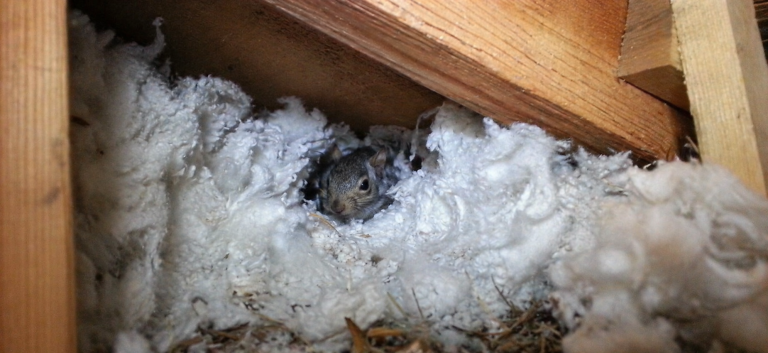
Inside the attic, squirrels often use insulation to build nests. This results in flattened insulation, displaced piles pushed aside, and nesting material mixed with leaves or twigs. You may also see trails carved through the insulation or dark stains caused by urine. This kind of damage reduces your home’s energy efficiency and can lead to noticeable odours. Over time, contaminated insulation can also impact indoor air quality.
Debris and Nesting Material
As squirrels build their nests, they bring in a variety of materials from outside. Leaves, twigs, paper, fabric, insulation, and pine needles are commonly used. Homeowners may notice debris falling from attic access points or collecting in corners, which is often a sign that active nesting is taking place above.
High-Pitched Squeaking or Chirping
If you begin hearing high-pitched squeaking or chirping sounds, particularly in the spring or early summer, it may indicate the presence of baby squirrels. During this time, adult squirrels are raising their young, which leads to increased activity and noise. Babies will often make these sounds when the mother leaves the nest. This is a critical stage, as improper removal can lead to serious issues such as lingering odours, additional damage, or the mother attempting to re-enter the home to retrieve her young.
Strong or Unusual Odours
Squirrels create waste within their nesting areas, which can lead to noticeable smells inside the home. These odours often start as mild, musty scents but can develop into stronger animal or urine-like smells over time. The smell is typically more noticeable near attic access points and tends to intensify as waste accumulates and nesting materials become saturated.
Pets Acting Strangely
Pets are often the first to detect wildlife activity. Dogs may bark at ceilings or walls, while cats may stare intently or paw at certain areas. Pets might also follow sounds or show restlessness near attic access points. If your pet becomes fixated on a specific part of the home, it can be a strong indication that animals are present above.
Daytime Activity in the Attic
Unlike many other attic pests that are nocturnal, squirrels are active during the day. This makes daytime noise one of the most reliable indicators of a squirrel problem. If you consistently hear movement during daylight hours, squirrels are far more likely to be the cause than mice or rats.
Repeat Damage in the Same Area
Squirrels are creatures of habit and tend to return to areas where they have successfully nested before. If you have repaired soffits or roof damage in the past and notice the same area being damaged again, it is likely that squirrels are returning to reuse the site. This highlights the importance of proper repairs and reinforcement rather than temporary fixes.
Why Squirrels Are So Destructive
Squirrels do more than simply occupy a space; they actively alter it. Their presence leads to chewed wood, torn insulation, damaged vents, compromised rooflines, and even chewed wiring. If left untreated, this damage can escalate into serious issues such as water leaks, heat loss, and costly structural repairs.
Health and Safety Risks of Squirrels in the Home
Beyond the physical damage, squirrels also introduce health and safety risks. They can carry parasites such as fleas, ticks, mites, and lice. Their droppings and urine may contain bacteria that can become airborne when disturbed, posing respiratory risks. Additionally, chewed wiring presents a significant fire hazard, while contaminated insulation can negatively affect the air quality throughout the home.
Why DIY Solutions Usually Fail
Many homeowners attempt to solve squirrel problems on their own by blocking entry points, using repellents, or trying to scare the animals away. However, these approaches often create more problems. Blocking holes while squirrels are still inside can trap them, repellents tend to be ineffective, and squirrels can easily chew through weak repairs. During nesting season, DIY efforts may also leave babies behind, leading to further complications. Effective squirrel removal requires proper timing, experience, and durable materials.
How Professional Squirrel Removal Works
Professional wildlife control focuses on safe and humane exclusion. The process begins with a thorough inspection to identify entry points, nesting areas, the presence of babies, and any structural damage. One-way doors are then installed to allow squirrels to exit while preventing them from re-entering. If babies are present, they are handled carefully to ensure the mother can relocate them. Once the animals are removed, all entry points are sealed using wildlife-resistant materials, and vulnerable areas are reinforced to prevent future access.
Why Squirrels Keep Coming Back
Squirrels tend to return because they remember safe nesting locations, follow scent trails, and are drawn to structural weaknesses and nearby food sources. Without proper repair and reinforcement, the same problem is likely to occur again.
When to Take Action
It is important to act quickly if you notice signs such as daytime attic noise, scratching or chewing sounds, visible damage to soffits or vents, debris falling from the attic, squeaking noises, strong odours, or unusual pet behaviour. Addressing the issue early can prevent more extensive damage and costly repairs.
Protect Your Home Before the Damage Grows
Squirrels do not leave on their own. Once they establish a nest, they settle in and often return year after year. The longer they remain, the more damage they cause and the more difficult removal becomes. If you are hearing noises in the attic, noticing roofline damage, or seeing signs of nesting, now is the time to act.
Book professional squirrel removal with Elite Pest and Wildlife Removal today and let our experienced team safely remove the squirrels, repair entry points, and protect your home from future wildlife intrusions. Reach out to our team for more information, or to schedule an inspection.