
admin · May 4, 2026
Raccoons have become one of the most common wildlife problems across Hamilton. From downtown neighborhoods to suburban streets and homes near green spaces, sightings of overturned garbage bins and attic damage are becoming routine. While raccoons have always been part of Ontario’s ecosystem, changes in urban development, food availability, and housing design have made Hamilton an ideal environment for them to thrive.
Understanding why raccoons are so drawn to attics and garbage bins helps homeowners recognize risks early and take steps to prevent costly damage. These animals are highly intelligent, adaptable, and persistent, and once they find a reliable food or shelter source, they rarely leave on their own.
Hamilton Offers the Perfect Environment for Raccoons
Hamilton’s mix of urban living, mature trees, ravines, parks, and residential neighborhoods creates ideal raccoon habitat. Many homes back onto green space or are located near natural corridors that raccoons use as travel routes. At the same time, dense neighborhoods provide easy access to food and shelter. Unlike more rural wildlife, raccoons have adapted extremely well to city life. They are comfortable around people, active at night, and skilled at navigating fences, rooftops, and structures. This combination makes Hamilton homes especially attractive.
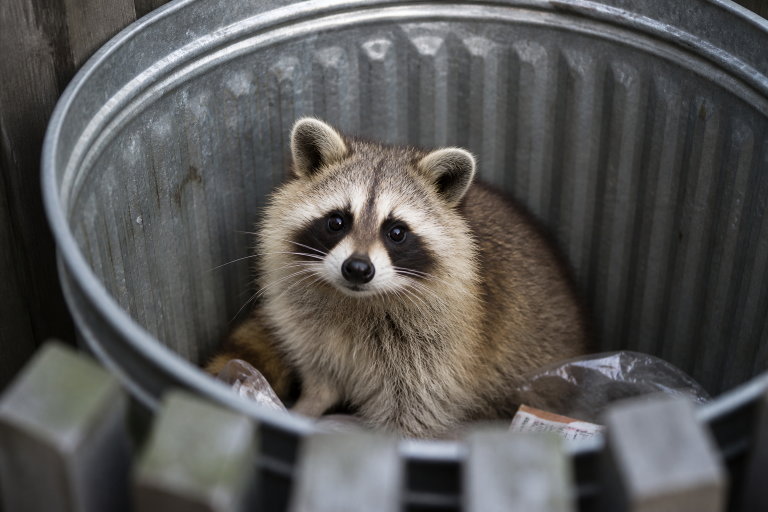
Garbage Bins Are an Easy Food Source
One of the biggest reasons raccoons are thriving in Hamilton is access to garbage. Residential garbage bins provide a consistent, calorie-dense food source that requires far less effort than foraging in the wild. Raccoons are strong and dexterous. They can lift lids, tip over bins, and tear through bags with ease. Food scraps, pet food containers, takeout packaging, and compost all attract them. Once a raccoon finds a reliable bin, it will return night after night and often bring others with it. In neighborhoods where bins are left out overnight or not properly secured, raccoon activity increases quickly. Over time, raccoons begin to associate nearby homes with food, making them more likely to explore attics, decks, and sheds.
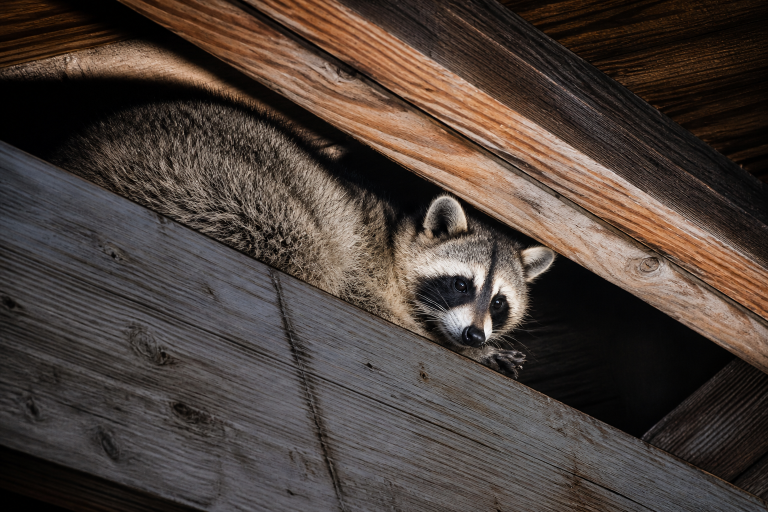
Attics Provide Warmth and Safety
While garbage bins attract raccoons to a property, attics are what convince them to stay.
Attics offer:
- Warmth from rising heat inside the home
- Protection from predators and weather
- Quiet, low-traffic spaces
- Ideal nesting conditions
Female raccoons, in particular, seek out attics when preparing to have babies. Once inside, they create nests using insulation and other materials. This can cause significant damage in a short amount of time. Raccoons are strong enough to tear through soffits, roof vents, and weak rooflines to gain access. Once an entry point exists, it often becomes a repeat access point year after year.
Older Homes and Rooflines Are Especially Vulnerable
Many Hamilton homes were built decades ago and feature wood soffits, aging fascia boards, and older roof vent designs. Over time, these materials weaken due to weather exposure, moisture, and temperature changes. Raccoons instinctively target areas where different building materials meet, such as corners of rooflines, dormers, and chimney edges. These joints are often the easiest places to pull apart or pry open.
Even newer homes are not immune. Improperly installed vents, loose soffit panels, or small gaps left during construction can quickly become access points once raccoons discover them.
Raccoons Are Excellent Climbers
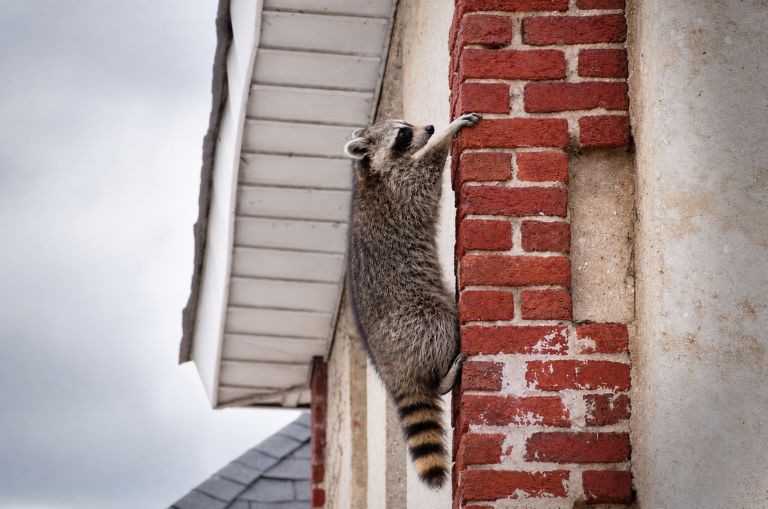
Another reason raccoons love Hamilton homes is how easy it is for them to reach the roof.
Raccoons use:
- Trees close to the house
- Fences and sheds
- Downspouts
- Deck railings
Many homes unintentionally provide raccoons with a direct path from the ground to the roofline. Once on the roof, raccoons explore until they find a weak spot. Homes with overhanging branches or nearby structures are particularly at risk.
Seasonal Behavior Drives Attic Intrusions
Raccoon activity follows seasonal patterns.
Spring
Spring is peak nesting season. Female raccoons aggressively seek attic spaces to raise their young. This is when most attic break-ins occur.
Summer
Raccoons continue to use garbage bins heavily and may still occupy attics if young are present.
Fall
As temperatures cool, raccoons increase food intake and may seek shelter for colder weather.
Winter
While raccoons do not fully hibernate, they become less active but will remain in attics if already established. Homeowners often notice damage or noise during spring and early summer when activity is highest.
Noise Is Often the First Warning Sign
Raccoons are much larger than rodents, so their presence is usually noticeable. These sounds are often heard at night or early morning. If noises are loud and heavy, raccoons are a strong possibility.
Common sounds include:
- Heavy thumping or walking
- Scratching and clawing
- Growling or chattering
- Movement that shifts locations
The Damage Raccoons Cause in Attics
Once raccoons enter an attic, damage escalates quickly. Raccoons are not careful occupants. Their size and strength make even short-term infestations destructive.
Common issues include:
- Torn or compacted insulation
- Broken soffits and roof vents
- Structural damage to wood framing
- Contamination from droppings and urine
- Strong odours
- Parasites such as fleas and mites
Health and Safety Risks
Raccoons pose real health risks to homeowners. Their droppings can carry bacteria and parasites, and urine can soak into insulation and wood. Contaminated attic air can circulate throughout the home, affecting indoor air quality. In addition, damaged rooflines increase the risk of water intrusion, mold growth, and heat loss.
Why Raccoons Keep Returning to the Same Homes
Raccoons have excellent memory and strong homing instincts. Once a raccoon successfully nests in an attic or accesses a food source, it is likely to return the following year. Even if removed, other raccoons may be attracted by lingering scent trails and existing damage. This is why simply removing the animal is not enough. Entry points must be properly repaired and reinforced to prevent repeat problems.
Why DIY Solutions Usually Fail
Many homeowners try to scare raccoons away or block openings themselves. These approaches often make the problem worse, leading to more damage and persistent attempts by raccoons to re-enter.
Common DIY mistakes include:
- Sealing entry points while raccoons are still inside
- Using weak materials that raccoons tear through
- Ignoring secondary access points
- Attempting removal during baby season
Professional Wildlife Control Focuses on Prevention
Effective raccoon control requires a strategic approach. This approach resolves the current issue and prevents future infestations.
Professional service includes:
- Full exterior and attic inspection
- Identification of all entry points
- Safe, humane removal methods
- Proper handling of baby raccoons when present
- Repair and reinforcement of damaged areas
- Recommendations to reduce attractants
How Homeowners Can Reduce Risk
While professional service is essential, homeowners can reduce risk by:
- Securing garbage bins with locking lids
- Removing food sources from yards
- Trimming branches away from the roof
- Inspecting soffits and vents regularly
- Addressing small repairs promptly
These steps help but do not replace professional inspection and exclusion work.
Don’t Let Raccoons Settle In
Raccoons love Hamilton’s attics and garbage bins because they provide easy food, warmth, and safety. Once raccoons become comfortable around a property, they often escalate from scavenging to nesting, leading to serious damage and ongoing problems. If you’ve noticed overturned garbage bins, attic noises, or roofline damage, now is the time to act. Elite Pest and Wildlife Removal specializes in humane raccoon removal and long-term exclusion solutions designed for Hamilton homes.
Book an inspection with Elite Pest and Wildlife Removal and protect your home before raccoons turn a temporary visit into a permanent residence.