
admin · May 19, 2026
If you have started noticing strange smells around your property, holes near your deck, or unusual activity at night, there is a good chance skunks may be living underneath your structure. Decks, sheds, porches, and other low-clearance areas provide excellent shelter for skunks looking for a safe place to sleep, raise babies, or escape bad weather.
Many homeowners in Ontario discover skunk problems during the spring and summer months when female skunks search for quiet denning areas to raise their young. Because skunks are nocturnal and avoid people whenever possible, infestations often go unnoticed until the smell becomes impossible to ignore.
Knowing the early warning signs can help you deal with the problem before damage worsens or baby skunks become involved. Understanding how skunks behave around homes is the first step toward safe and effective removal.
Why Skunks Choose Decks and Sheds
Skunks naturally look for sheltered, dark, and protected areas where they can stay hidden during the day. In urban and suburban neighbourhoods, decks and sheds provide almost everything they need. The space underneath a deck offers protection from predators, rain, wind, and extreme temperatures. Sheds also create quiet environments where skunks can nest without much disturbance. If the structure sits low to the ground or has gaps around the perimeter, skunks can often move underneath with very little effort.
Food sources nearby also play a major role. Properties with accessible garbage, fallen bird seed, pet food, grubs, or outdoor water sources tend to attract skunks more frequently. Once they find both food and shelter in the same area, they may decide to stay long-term.
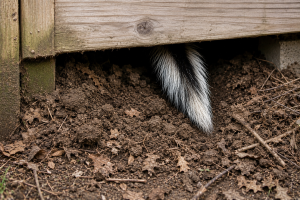
The Most Common Signs of Skunks Under a Deck or Shed
One of the clearest indicators of skunks is their smell. Skunk odour is strong, oily, and difficult to miss. Even if a skunk has not sprayed directly, the area around an active den can develop a lingering musky smell over time. Many homeowners notice the scent strongest during the evening or early morning hours when skunks are most active.
Small holes near the structure are another major warning sign. Skunks commonly dig shallow openings along the edges of decks, sheds, or concrete slabs to gain access underneath. These holes are usually several inches wide and may have loose soil pushed outward nearby.
Tracks can also help identify activity. Skunk footprints resemble tiny human handprints with visible claw marks. You may spot them in mud, dust, snow, or soft soil around the property.
Another common sign is damage to lawns. Skunks feed heavily on grubs and insects, often digging small cone-shaped holes throughout the grass overnight. If your yard suddenly develops scattered digging damage, it may indicate skunks are active nearby.
Pet behaviour can also reveal a hidden problem. Dogs often become very interested in areas where skunks are denning and may repeatedly sniff, bark, or scratch near the deck or shed. Unfortunately, curious pets sometimes end up getting sprayed during these encounters.
Homeowners occasionally hear noises as well. Scratching, rustling, or movement under the deck during nighttime hours may point to active wildlife underneath the structure. During baby season, faint squeaking or chirping sounds may also be heard from kits inside the den.
When Skunks Are Most Active
Skunks can cause problems throughout the year, but activity often increases during spring and early summer. Female skunks search for safe denning areas to raise their babies during this period, making decks and sheds especially attractive.
During colder months, skunks may still remain under structures for warmth and protection, particularly during stretches of harsh winter weather. Although they do not fully hibernate, they become less active during extreme cold.
Because skunks are nocturnal, most activity happens after sunset. Homeowners may spot them crossing the yard at night or catch movement on security cameras during overnight hours.
Why You Should Not Ignore a Skunk Problem
Some homeowners hope skunks will simply move on by themselves, but this often leads to larger problems. Once skunks establish a den site, they may remain for extended periods, especially if babies are present.
Skunks can damage landscaping through repeated digging and burrowing. Their activity may also weaken the soil around deck supports, sheds, or concrete slabs over time. Odours can become increasingly severe, particularly if spraying occurs near the structure.
There are also health and safety concerns. Skunks are one of the primary carriers of rabies in Ontario wildlife populations. While rabid skunks are not extremely common, any direct interaction with wildlife should be avoided. Skunks can also carry fleas, ticks, and parasites that may spread to pets or surrounding areas.
The biggest concern for many homeowners is accidental spraying. A startled skunk can spray people, pets, garages, outdoor furniture, and even nearby siding. The smell can linger for weeks if not properly cleaned.
Why DIY Removal Can Be Risky
Trying to remove skunks without proper experience can quickly go wrong. Many homeowners attempt to block entrances or scare skunks away without realizing babies may still be underneath the structure. Sealing the area improperly can separate mothers from their young, leading to dead animals, strong odours, and further wildlife issues.
Attempting to trap or corner a skunk also greatly increases the chances of being sprayed. Even approaching too closely can trigger defensive behaviour. Store-bought repellents and bright lights are often unreliable as permanent solutions. While they may temporarily disturb the animals, they rarely solve the root problem if entry points remain accessible.
How Professional Skunk Removal Works
Professional wildlife removal focuses on safely removing the skunks while preventing them from returning. The first step is a full inspection of the property. Technicians identify entry points, signs of activity, and whether babies are present underneath the structure. From there, a humane removal plan is developed based on the situation.
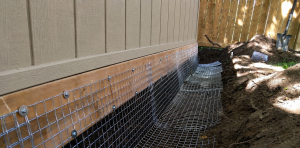
In many cases, professionals use a one-way door system. This allows skunks to safely exit the area while preventing them from getting back underneath. Once the animals are confirmed gone, the access points are sealed to stop future entry.
If babies are present, removal becomes more delicate. Wildlife technicians may need to carefully remove and reunite the young with the mother outside the structure before exclusion work can be completed.
Professional removal also focuses on long-term prevention. Reinforcing vulnerable areas, screening gaps, and addressing attractants around the property help reduce the likelihood of future problems.
How to Help Prevent Skunks From Returning
Preventative maintenance plays a major role in keeping skunks away from your property. Keeping the perimeter of decks and sheds properly secured is one of the most effective steps. Heavy-duty screening or buried barriers can help block access underneath structures. Removing food attractants such as accessible garbage, fallen fruit, bird seed, and outdoor pet food also helps discourage wildlife activity.
Maintaining your lawn can reduce grub populations, which are a major food source for skunks. Fixing gaps around fences and minimizing clutter around the yard can further reduce hiding opportunities. Exterior lighting and regular inspections around the property may also help homeowners catch wildlife issues early before they become larger infestations.
Call Elite Pest & Wildlife Removal for Safe Skunk Removal
If you suspect skunks are living under your deck or shed, it is important to deal with the problem before damage, odours, or spraying incidents get worse. Professional removal ensures the animals are handled safely and humanely while helping protect your home from future wildlife problems.
Elite Pest & Wildlife Removal provides humane skunk removal and exclusion services throughout Ontario. Our team can inspect your property, safely remove the skunks, and seal entry points to help keep them from coming back.
Reach out to our team today for more information on skunk exclusion, or to book an inspection today.