
admin · June 9, 2026
Why Raccoon Feces Are Dangerous for Hamilton Homeowners
Raccoons are a common wildlife issue across Hamilton, frequently taking up residence in attics, garages, sheds, and under decks. While most homeowners focus on the noise, nesting activity, and structural damage raccoons cause, one of the most serious and often overlooked dangers is the contamination left behind by their feces. Raccoon droppings can pose significant health risks, create persistent odours, contaminate living spaces, and cause long-term damage to a home if they are not properly addressed.
Understanding the risks associated with raccoon feces and the importance of professional cleanup can help protect both your family and your property.
Why Raccoon Feces Are More Dangerous Than Most People Realize
Raccoon droppings are very different from the waste left behind by smaller pests. They are larger, more concentrated, and often found in dedicated areas known as raccoon latrines. Unlike many animals that leave waste in random locations, raccoons tend to return to the same spot repeatedly. Over months or even years, these latrines can accumulate significant amounts of feces and urine, creating serious contamination concerns. Common raccoon latrine locations include attics, roof corners, garages, sheds, chimney bases, under decks, and along fence lines. Because raccoons repeatedly use these areas, contamination levels continue to increase over time.
Raccoon Roundworm: A Serious Health Threat
One of the most significant dangers associated with raccoon feces is a parasite known as raccoon roundworm. The eggs of this parasite can be present in raccoon droppings and may remain viable in the environment for years. If these eggs are accidentally ingested, they can cause severe illness and, in rare cases, neurological damage.
Exposure often occurs when dried feces are disturbed, allowing microscopic particles to become airborne. People can also come into contact with contaminated surfaces, objects, or soil. Children are particularly vulnerable because they are more likely to place their hands or contaminated objects in their mouths. Pets may also be exposed while exploring contaminated areas around the property.
Airborne Contamination Inside the Home
When raccoons establish latrines in attics or wall cavities, the danger extends beyond the immediate nesting area. As droppings dry out, tiny particles can become airborne and spread throughout the structure. In many homes, attic contamination can affect indoor air quality as particles circulate through ventilation systems and living spaces. Homeowners may begin noticing musty, foul, or ammonia-like odours that become stronger during warmer weather. Along with unpleasant smells, contamination may contribute to respiratory irritation, allergic reactions, and ongoing indoor air quality concerns.
Why Attic Contamination Is Especially Problematic
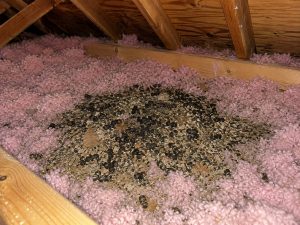
Attics are among the most common locations for raccoon infestations and are often where the most severe contamination occurs. Because attics sit directly above living areas, waste accumulation can affect the entire home.
Raccoon droppings frequently become embedded in insulation, while urine can soak deep into wood framing and other building materials. Over time, insulation loses its effectiveness as it becomes compressed and contaminated. In many cases, contaminated insulation cannot be safely cleaned and must be removed and replaced. What begins as a wildlife issue can quickly turn into a major sanitation and restoration project if the problem is left untreated.
Structural Damage Caused by Waste Accumulation
Raccoon waste creates more than just health concerns. Prolonged exposure to feces and urine can damage building materials throughout the affected area. Wood framing can absorb moisture and begin to deteriorate. Drywall and ceilings may become stained, while metal fasteners and hardware can corrode over time. Insulation breaks down and loses its ability to regulate indoor temperatures effectively. As contamination spreads, repair costs often increase significantly, especially when multiple building materials require replacement.
Why DIY Cleanup Is Dangerous
Many homeowners attempt to clean raccoon feces themselves using household cleaning products, gloves, or shop vacuums. Unfortunately, this approach often increases the risk of exposure. Disturbing dried feces can release harmful particles into the air, potentially spreading contamination throughout the home. Standard household cleaning methods rarely eliminate deeply embedded waste, and contaminated insulation often remains untouched. Without specialized equipment and protective gear, homeowners may unknowingly expose themselves and their families to harmful pathogens. Even when visible droppings are removed, hidden contamination frequently remains behind.
The Risk to Pets
Pets are often the first members of the household to encounter raccoon droppings. Dogs, in particular, are naturally curious and may sniff, investigate, or even ingest contaminated material found in yards, garages, sheds, or beneath decks. Once contamination is brought indoors on paws or fur, exposure risks increase for everyone in the household. In some cases, pets may develop health problems that require veterinary treatment, adding further complications to an already serious issue.
Why Odours Remain After Visible Cleanup
Homeowners are often surprised when unpleasant smells linger after they remove visible raccoon droppings. This occurs because contamination typically extends far beyond what can be seen on the surface. Urine and waste can penetrate insulation, wood framing, drywall, subflooring, and other porous materials. Even after the visible waste is removed, the source of the odour often remains trapped within the structure. During warmer months, these smells may intensify and continue to affect indoor comfort. Without proper sanitation and material replacement where necessary, odour problems can persist indefinitely.
Raccoon Latrines Increase the Risk of Re-Infestation
Raccoon feces are not only a sanitation issue; they can also contribute to future wildlife problems. Raccoons are attracted to familiar scents and established latrine sites. If contamination remains after removal, it may encourage the original animals to return or attract new raccoons to the property. This is why thorough cleanup is an essential part of any successful wildlife removal program. Removing the animals without addressing the contamination often leaves behind the conditions that encouraged the infestation in the first place.
Why Professional Cleanup Is Necessary
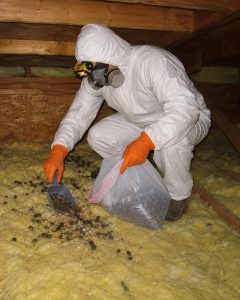
Professional raccoon feces cleanup involves much more than simply removing visible droppings. Trained wildlife and remediation specialists use proper protective equipment, containment procedures, and sanitation methods to address the full extent of contamination.
The process often includes the safe removal of waste, replacement of contaminated insulation, disinfection of affected surfaces, odour treatment, and assessment of any structural damage. By addressing both visible and hidden contamination, professional cleanup helps restore the safety and cleanliness of the affected area.
Cleanup Should Always Follow Wildlife Removal
Before cleanup can begin, the wildlife problem itself must be resolved. Cleaning contaminated areas while raccoons are still present is ineffective because new waste will continue to accumulate. A complete solution involves humane raccoon removal, exclusion measures to prevent re-entry, sealing of access points, and full sanitation of the affected areas. Addressing every step of the process helps ensure the problem does not return.
Health Risks Increase Over Time
The longer raccoon feces remain inside a structure, the greater the potential risk becomes. Contamination accumulates, odours worsen, and opportunities for exposure increase. Moisture, air circulation, and repeated wildlife activity all contribute to the spread of contaminants. Early intervention not only reduces health risks but can also significantly lower cleanup and repair costs.
Why Older Hamilton Homes Are Especially Vulnerable
Many older Hamilton homes contain materials that readily absorb contaminants. Older insulation, wood framing, and ventilation systems often allow waste particles and odours to penetrate deeply into the structure. Because contamination may spread further than homeowners realize, professional inspections are often necessary to determine how extensive the damage has become and which materials can be restored versus replaced.
Prevention Matters After Cleanup
Once a contaminated area has been cleaned, preventing future wildlife access becomes critical. Long-term protection typically involves reinforcing vulnerable roof vents and soffits, sealing roofline gaps, installing exclusion devices where necessary, and removing food or shelter sources that attract wildlife. A comprehensive approach helps ensure the home remains protected from future contamination and wildlife activity.
Protect Your Home and Health
Raccoon feces are far more than an unpleasant nuisance. The health risks, structural damage, and long-term contamination associated with raccoon waste make proper removal and cleanup essential for homeowners. If you suspect raccoon activity or have discovered droppings in your attic, garage, shed, or yard, Elite Pest and Wildlife Removal can help. Our team specializes in humane raccoon removal, professional feces cleanup, attic restoration, and long-term exclusion solutions designed to protect Hamilton homes.
Book a professional inspection with Elite Pest and Wildlife Removal today and ensure your home is clean, safe, and protected from future wildlife contamination.