
admin · May 25, 2026
Raccoons are one of the most destructive wildlife species to invade residential homes, especially when they gain access to attics. In Hamilton and nearby communities, raccoon attic damage is becoming increasingly common due to urban expansion, aging housing materials, and easy access to food sources. Because raccoons are large, intelligent, and persistent animals, the damage they cause is often severe and expensive if not addressed early.
Many homeowners do not realize they have a raccoon problem until the damage is already extensive. Learning how to identify raccoon activity and attic damage early can help reduce repair costs and prevent repeat infestations.
Why Raccoons Target Attics
Raccoons constantly search for warm, quiet, and protected places to rest or raise their young. Attics provide ideal shelter, especially during spring and early summer baby season. Once a raccoon gains access, the attic often becomes a long-term den rather than a temporary hiding place.
The warmth from the home below, protection from predators and harsh weather, and privacy for nesting make attics extremely attractive. Older homes with weakened soffits, roof vents, or roofline gaps are especially vulnerable to raccoon entry.
Loud Noises Coming From the Ceiling
One of the earliest signs of raccoons in the attic is heavy noise above the ceiling. Unlike mice or squirrels, raccoons are large animals that create loud and unmistakable sounds as they move around.
Homeowners often hear thumping, stomping, scratching, dragging, or tearing noises, especially overnight or early in the morning when raccoons are most active. Some people also hear vocal sounds such as growling, chattering, or baby raccoons squealing during nesting season. If the sounds feel too heavy to be caused by small rodents, raccoons are a strong possibility.
Torn and Flattened Insulation
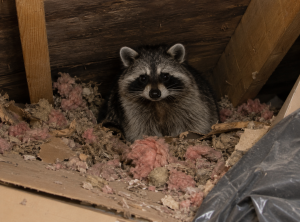
Raccoons do not move gently through attic spaces. They aggressively push through insulation to create pathways and nesting areas. Over time, this activity destroys the insulation’s effectiveness and can increase heating and cooling costs throughout the home. In many raccoon infestations, insulation becomes heavily compacted, flattened, or pushed into piles. In some cases, sections of the attic floor may become exposed where insulation has been completely displaced. This type of damage often spreads quickly once raccoons settle into the attic.
Droppings and Urine Contamination
Raccoon droppings are significantly larger than rodent droppings and are often concentrated near nesting areas or travel paths. Urine contamination is also common and can soak deep into insulation and wooden framing materials.
Over time, the contamination creates strong odours and unhealthy conditions inside the attic. Bacteria, parasites, and airborne particles from droppings can eventually affect indoor air quality throughout the home. In severe infestations, professional attic cleanup and insulation replacement may become necessary after removal.
Strong Odours in the Home
Many homeowners first notice a raccoon problem because of unusual smells coming from the attic or upper levels of the house. The odours may come from urine, droppings, food scraps brought into the attic, or deceased animals trapped within the space. During warmer weather, these smells often become much stronger and more noticeable. People commonly describe raccoon attic odours as musky, ammonia-like, or foul-smelling. The smell usually intensifies over time as contamination worsens.
Damage Around the Roofline
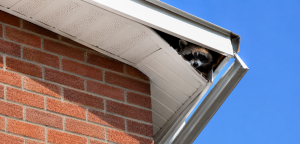
Raccoons rarely enter an attic without leaving visible exterior damage behind. They typically force their way through weak areas along the roofline, including soffits, fascia boards, roof vents, and shingles.
Homeowners may notice torn soffit panels, bent roof vents, lifted shingles, or broken fascia boards around the area where raccoons are entering. Since raccoons repeatedly use the same entry points, the damage often becomes larger over time. Seeing this type of roofline damage alongside attic noises is a major indicator of raccoon activity.
Daytime Activity on the Roof
Although raccoons are primarily nocturnal, attic infestations can sometimes lead to daytime sightings. Mother raccoons caring for babies may become active during daylight hours as they search for food or move between den sites. If you repeatedly see a raccoon climbing on your roof or focusing on the same area of the house, there is a strong possibility it has established a den nearby.
Nesting Materials Inside the Attic
Raccoons often gather materials to build nesting areas for resting and raising their young. These nests are usually concentrated in corners or quieter sections of the attic. Insulation is one of the most common nesting materials, but raccoons may also drag in leaves, twigs, roofing materials, cardboard, fabric, and other debris from outside. Large nesting areas are a strong sign that the infestation has been active for an extended period.
Signs of Baby Raccoons
Spring and early summer are peak baby season for raccoons in Ontario. If babies are present, homeowners may hear high-pitched chirping, squealing, or crying sounds coming from the attic.
Mother raccoons become far more defensive and destructive when caring for their young. Attempting to remove or disturb the animals during this time can create additional risks and complications. Baby raccoons also increase the amount of damage and contamination inside the attic because the den often remains active for longer periods.
Structural Damage Inside the Attic
Raccoons are strong enough to damage wooden framing, vents, ductwork, and other structural components inside the attic. Their constant movement and nesting behaviour can loosen materials and weaken sections of the structure over time. Much of this damage goes unnoticed until professional inspections or renovation work reveal the extent of the problem.
Why Raccoon Damage Gets Worse Quickly
Raccoon infestations escalate rapidly once access to the attic has been established. Entry points continue to grow larger as raccoons force their way in and out of the structure. Nesting areas expand, contamination spreads, and insulation damage worsens. The longer the infestation continues, the more expensive the repairs typically become. Damaged attics may also attract other wildlife or rodents looking for shelter.
Health Risks Associated With Raccoons
Beyond structural damage, raccoons also create health concerns for homeowners and pets. Raccoons may carry fleas, mites, bacteria, and parasites that can spread throughout the attic and surrounding areas. Waste contamination can reduce indoor air quality, while moisture buildup from urine may contribute to mould growth over time. Because raccoons are also known carriers of rabies, direct interaction should always be avoided.
Why DIY Inspections Often Miss the Full Problem
Many homeowners attempt to inspect their attic themselves, but raccoon damage is often more extensive than it first appears. Hidden contamination, secondary entry points, and structural issues beneath insulation can easily go unnoticed without proper experience and equipment.
There is also the risk of disturbing a mother raccoon or accidentally separating babies from the nest. Professional wildlife inspections provide a much clearer understanding of the situation and help ensure the problem is resolved safely and completely.
Professional Wildlife Inspections Make the Difference
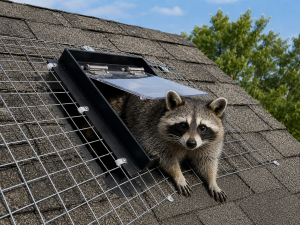
Professional raccoon exclusion starts with an inspection to identify an active raccoon presence, entry points, nesting areas, contamination levels, and whether babies are present. This information allows technicians to safely remove the raccoons using humane removal methods while creating a long-term exclusion plan to prevent future infestations. Simply removing the animal without properly sealing and reinforcing entry points almost always leads to repeat problems.
How to Protect Your Attic Long Term
Long-term raccoon prevention requires more than temporary fixes. Effective protection typically includes humane removal using one-way door systems, sealing all entry points, reinforcing vulnerable roofline areas, and repairing attic damage caused by the infestation. Preventative inspections can also help identify weak areas before wildlife gains access to the home.
Don’t Ignore the Signs of Raccoon Damage
Raccoon damage in attics is rarely minor and never resolves on its own. The longer an infestation continues, the more extensive and expensive the repairs become. If you have noticed attic noises, roofline damage, strong odours, or signs of nesting, it is important to act quickly before the situation worsens.
Elite Pest & Wildlife Removal specializes in raccoon inspections, humane removal, attic damage assessment, and long-term exclusion solutions for homes throughout Hamilton and surrounding areas.
Reach out to our team to book an inspection, and stop raccoon damage before it gets worse.